



Science vs disease: NBA taps biotechnology to save cassava, a failing lifeline crop
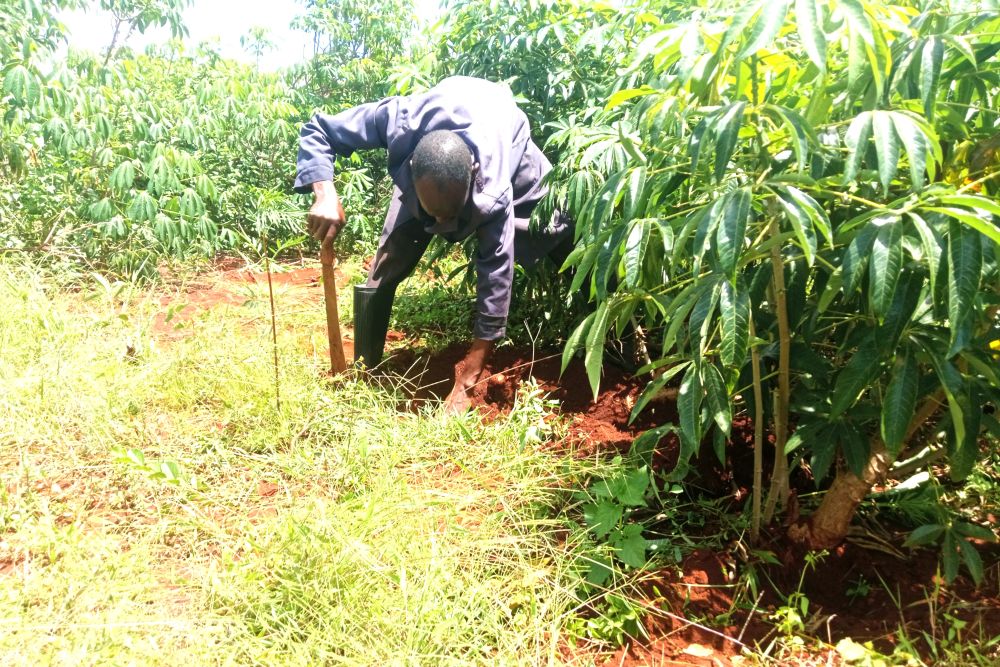
In the fertile farmlands of western Kenya, there lies a silent crisis that has for years hit locals, even though not directly, so hard leaving devastation in its wake.
Cassava, one of the region’s lifelines beyond the border, has always come under attack from at least two vicious enemies: Cassava Brown Streak Disease (CBSD) and Cassava Mosaic Disease (CMD).
Though harmless to humans, their impact has been felt on the farms as it has the capacity to completely wipe out up to 100 per cent of the crop, stripping families of both food and income.
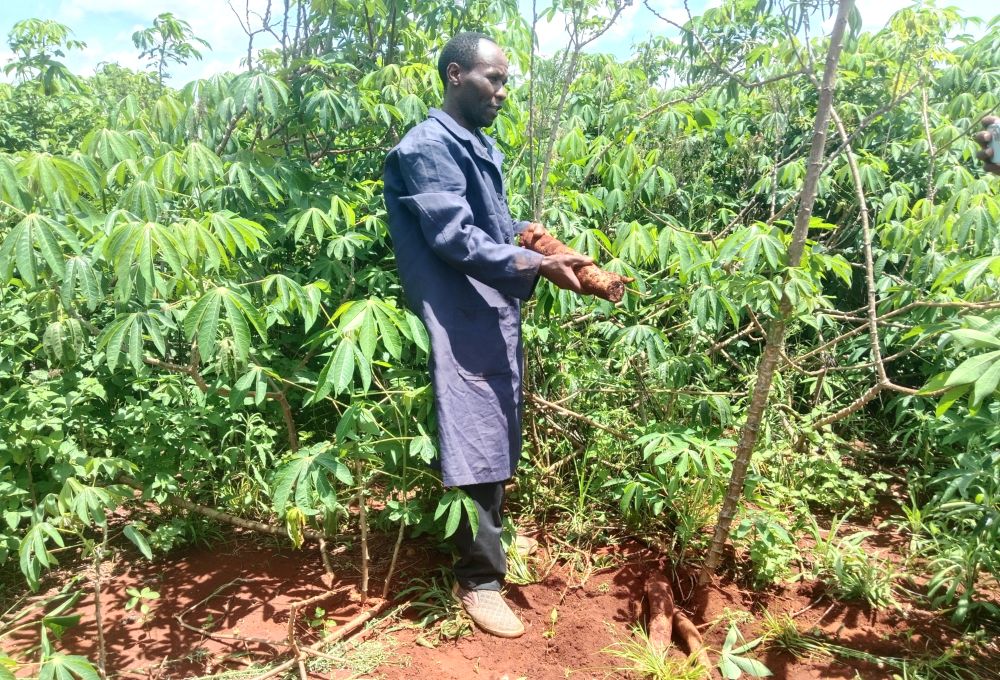
Above the soil, CMD curls and turns the leaves yellow, affecting the crop’s growth, in the end, killing yields.
Under the cover of the soil, CBSD actively eats the roots to rot leaving the crop hardened, streaked brown, and completely inedible.
These ‘twins of destruction’ form some of the most lethal threat to cassava farming and production and for farmers, this is the key to hunger, and low income.
But there is hope. One of the best ways to address these two diseases and others, not just in cassava, is by embracing technology in crop production.
Thanks to our scientists.
As the uptake of advanced technology sweeps across other fields, the same should be positively welcomed in crop production, and Kenya, through the National Biodiversity Authority (NBA), stands the best chance.
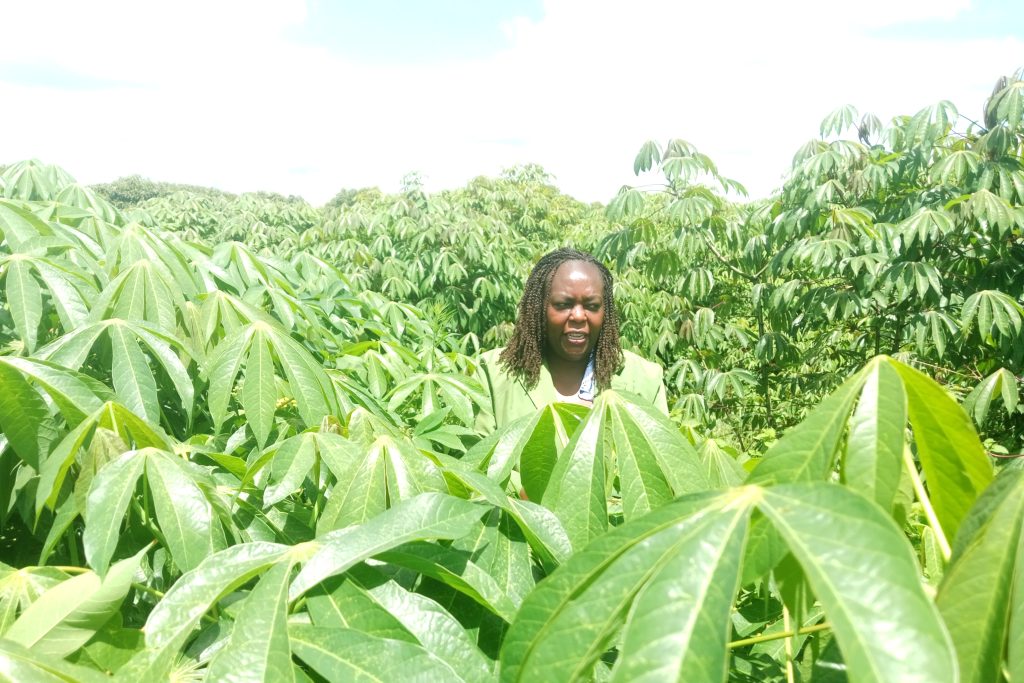
Despite court cases slowing the pace of its work in the country, the NBA has not taken the back seat and is actively involved in raising public awareness about what Genetically Modified Organisms (GMOs) really are.
Over the years, anti-GMO crusaders have gone into overdrive, spreading misconceptions, with even some influential political and policy leaders being at the forefront of misinforming the public.
But, Genetically Modified Organisms (GMOs) are simply crops that have been scientifically altered to enhance their quality and resistance to diseases.
To understand better, research refers to scientific studies and experiments involving plants, animals, microorganisms and pharmaceuticals that have not yet received approval for human use.
In this case, the NBA is the State corporation that was established under the Biosafety Act, Cap 320 of the Laws of Kenya, and charged with exercising general supervision and control over the transfer, handling and use of GMOs, with a view to ensuring the safety of human and animal health and providing adequate protection of the environment.
For instance, Bt maize has been genetically altered to make it resistant to certain diseases.
Also, Bt Cassava has been scientifically modified to fight diseases such the CMD and CBSD.
At the moment, there are no GMO foods in the country due to ongoing legal action in court.
According to the NBA, anyone carrying out GMO research in Kenya must comply with the requirements of the Biosafety Act Cap 320; therefore, there is no chance of GMOs being released to the public without due diligence.
And once the court cases are resolved, the NBA will be able to commercialise and roll out GM crops to farmers.
Currently, researchers and scientists are engaged in the multiplication of GM cassava at the Kenya Agricultural and Livestock Research Organisation (KALRO).
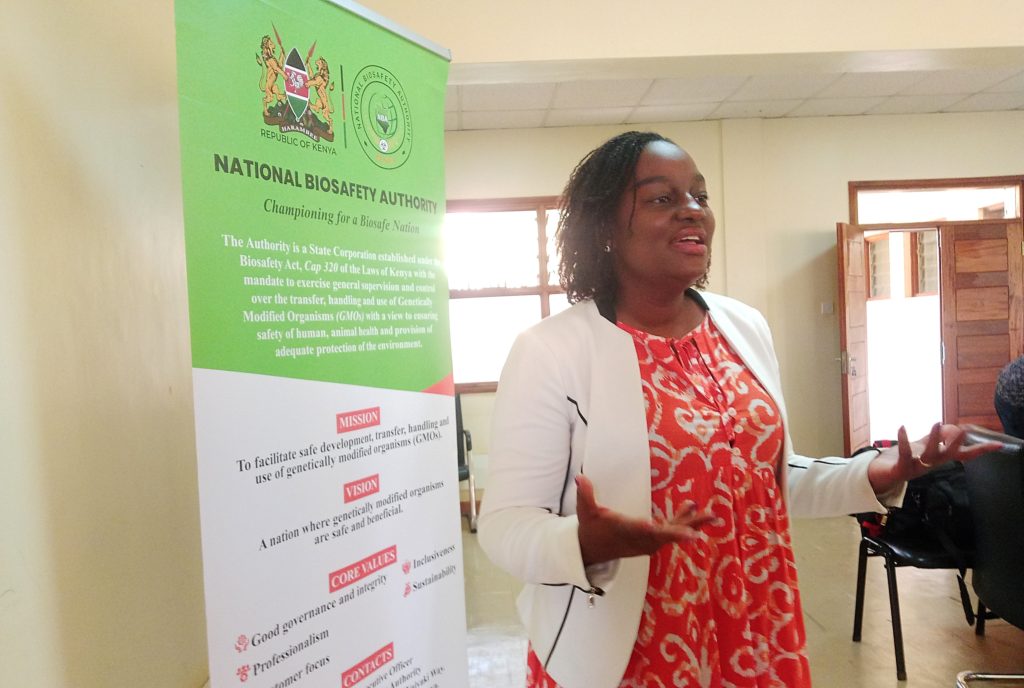
Speaking on April 10, 2026 during a media engagement session, the NBA acting CEO Dr Anne Karimi revealed that they are in the process of expanding GM cassava lines to withstand CBSD.
At least 280 cassava lines have been developed. Modern biotechnology has been used to develop these varieties in readiness for approval and eventual release to farmers, should the court cases be resolved in the Authority’s favour.
Cassava is a highly drought-resistant crop, vital for food security, and is also used for industrial production.
Due to its critical economic value, scientists are keen to safeguard it, which is why they have invested heavily in improving it. At present, confined field trials and evaluation are at an advanced stage.
This was revealed by the Deputy Director for Biosafety Licensing, Monitoring and Surveillance, Julia Njagi, during a media sensitisation at KALRO, Kandara.
According to Dr Karimi, commercialised GMO crops in the country include Bt maize and Bt cotton, while GM potato is in the pipeline.
Njagi added that applications for four GMO crops have already been processed.