





Tupande: Green Dreams Take Root as Millions of Free Seedlings Reach Smallholder Farmers
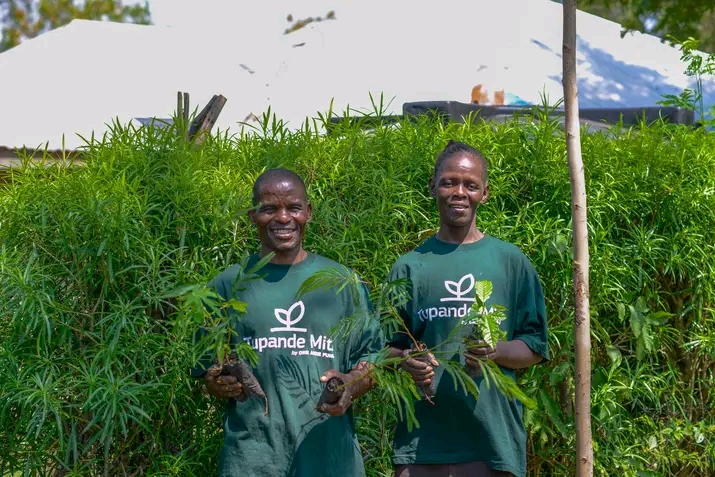
The Ministry of Environment, Climate Change & Forestry in 2025, joined forces with One Acre Fund’s Tupande to launch the National Seedling Distribution cycle, a large-scale push to put 48 million trees in the hands of smallholder farmers this year.
The campaign is anchored by 330 nurseries across 34 counties and is a major step toward President William Ruto’s December 2022 pledge to grow 15 billion trees and restore 5.1 million hectares of degraded land by 2032.
The partnership was formalized in April 2026 through a three-year Memorandum of Understanding between the Ministry and Tupande. It places smallholder farmers at the heart of Kenya’s restoration agenda.
With 80% of Kenyans depending on agriculture for their livelihoods, the Ministry says empowering farmers with seedlings and training is the fastest way to scale tree cover while improving incomes and food security.
According to Tupande, data from the Food and Agriculture Organization underscores why agroforestry matters. Trees reduce soil erosion, increase water infiltration, and add nutrients that cut fertilizer needs. They also moderate extreme temperatures and protect crops from harsh weather.
Species like grevillea have been shown to improve soil health and boost yields when intercropped with staples such as maize and beans.
Tupande is already a major player in Kenya’s tree growing efforts. The organization has distributed more than 160 million seedlings since it began operations.
In 2025 alone, it delivered over 50 million seedlings through a mix of channels including schools, hospitals, churches, and direct farmer outreach.
During the most recent government tree planting day, Tupande distributed 5 million seedlings in a single day.
This year, Tupande has set an ambitious target of 48 million seedlings across its 330 operating nurseries. The work feeds into a broader regional goal to plant 1 billion trees by 2030 across the nine countries where Tupande serves smallholder farmers.
The campaign is designed to remove barriers that keep farmers from planting trees. Every farmer who walks into a Tupande nursery receives 20 free seedlings automatically, with no purchase required.
Farmers enrolled in Tupande’s programs receive 30 free seedlings for the season. This ensures that cost is not a reason to skip tree planting. Tupande’s 330 nurseries are spread across 34 counties and deliberately located within walking distance of rural communities.
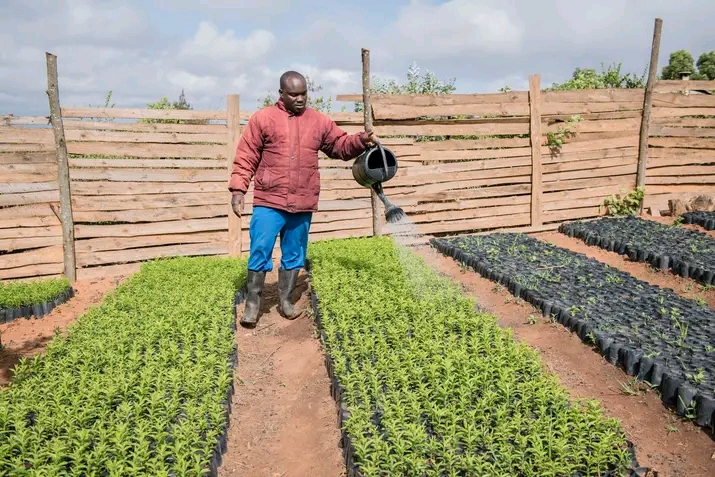
Each nursery is run by a Nursery Manager and staffed with 5 marketing agents who handle community awareness and technical support. Nursery staff are trained to advise farmers based on individual land size, soil type, and goals.
That means a farmer in Uasin Gishu growing maize gets different guidance than a coffee farmer in Nyeri.
Farmers can choose from a wide range of timber and fruit trees. Timber options include Grevillea, Markhamia, Cordia, Cypress, Eucalyptus, and Bottle Brush. Fruit trees cover grafted Avocado, Macadamia, Apple, Mango, and Orange, plus non-grafted options like passion fruit, tree tomatoes, and pawpaw.
The mix lets farmers balance long-term timber income with short-term nutrition and cash from fruits. The MOU between the Ministry and Tupande rests on four commitments.
First, the 330 nurseries will be the backbone for producing diverse, high-quality seedlings at scale to ensure sustainable supply.
Second, a three-year plan will shift from plastic poly tubes to biodegradable seedling tubes, keeping the restoration drive environmentally sound from start to finish.
Third, all Tupande nurseries will be registered on the Jaza Miti app, which allows real-time, transparent tracking of seedlings distributed and trees planted across the country.
Fourth, annual joint awareness campaigns and technical training will teach farmers sustainable planting practices and the link between trees and farm productivity.
Beyond environmental benefits, the nursery network is creating rural jobs. Each nursery supports at least 6 direct jobs through the manager and marketing agents.
Tupande also provides materials and training on proper seedling management to ensure survival rates stay high after planting.
Kenya is facing pressure from land degradation, climate variability, and rising input costs. The Ministry says agroforestry is a proven tool to reverse these trends while keeping farmers profitable.
By combining free inputs, localized advice, and market-linked species like avocado and macadamia, the campaign ties environmental goals to household income.
Chrispinus Akinda, Tupande’s representative, said the demand from farmers has been overwhelming.
“When a farmer knows they can walk to the nursery and get quality seedlings for free, with advice on what fits their shamba, they don’t hesitate. We’ve seen mothers planting fruit trees for their children’s nutrition and young men starting timber plots for future school fees. This is not just about hitting a number. It’s about changing what’s possible on a one-acre farm.” Akinda said.
Further, he added that the shift to biodegradable tubes matters to farmers too.
“Farmers are the first to feel the effects of plastic in the soil. By going biodegradable, we’re showing that restoration starts right from the nursery.” he added
Akinda noted that survival rates improve when farmers get the right tree for the right place saying grevillea seedling in Uasin Gishu is not the same story as a mango in Makueni. Our nursery managers live in these communities. They know the soils, the rainfall, and the markets. That local knowledge is why these trees will still be standing in 10 years.
As highlighted by Tupande, the Environment CS is expected to note that smallholders manage most of Kenya’s land and are therefore critical to hitting the 15 billion tree target.
Tupande emphasizes that farmers are eager to plant trees when seedlings are free and support is nearby. Farmers interested in seedlings can visit their nearest Tupande nursery. Enrollment for the 30-seedling package is ongoing.