


Mudavadi Urges Shift From Aid to Trade as Africa Deepens Ties With South Korea
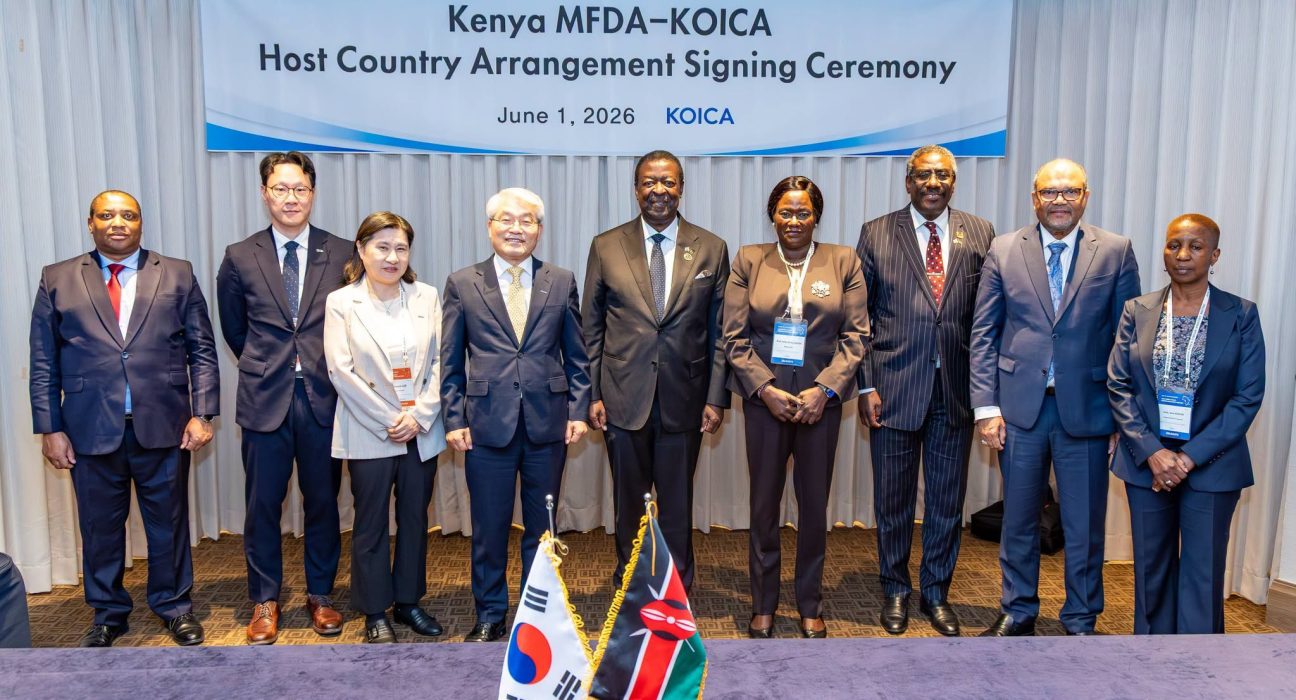
Prime Cabinet Secretary and Cabinet Secretary for Foreign and Diaspora Affairs Musalia Mudavadi has called on African countries to move away from aid dependency and embrace trade, investment, industrialization, and value addition as the continent seeks deeper economic cooperation with South Korea.
Speaking at the Korea-Africa Ministerial Meeting in Seoul on June 1, Mudavadi said Africa must leverage strategic partnerships to drive sustainable growth, create jobs, and strengthen its position in global value chains.
Addressing foreign ministers and senior officials from Africa and South Korea, Mudavadi described the meeting as a critical platform for strengthening cooperation and promoting shared prosperity at a time of growing geopolitical uncertainty and economic disruption.
“Our meeting takes place amid growing geopolitical turbulence that has disrupted economic cooperation and development,” Mudavadi said, citing concerns over weakening multilateral institutions and increasing threats to global cooperation.
He urged countries in the Global South to rethink their economic strategies and diversify partnerships in preparation for what he termed a changing global order.
“In this context, the Global South must begin to strategically prepare for the world beyond the current order. This is an opportune moment for us to rethink and recalibrate our trade pathways, as well as diversify and consolidate strategic partnerships,” he said.
Mudavadi emphasized that Africa’s relationship with South Korea should be anchored on trade and investment rather than aid, arguing that stronger private-sector collaboration would accelerate industrialization and create employment opportunities for the continent’s rapidly growing youth population.
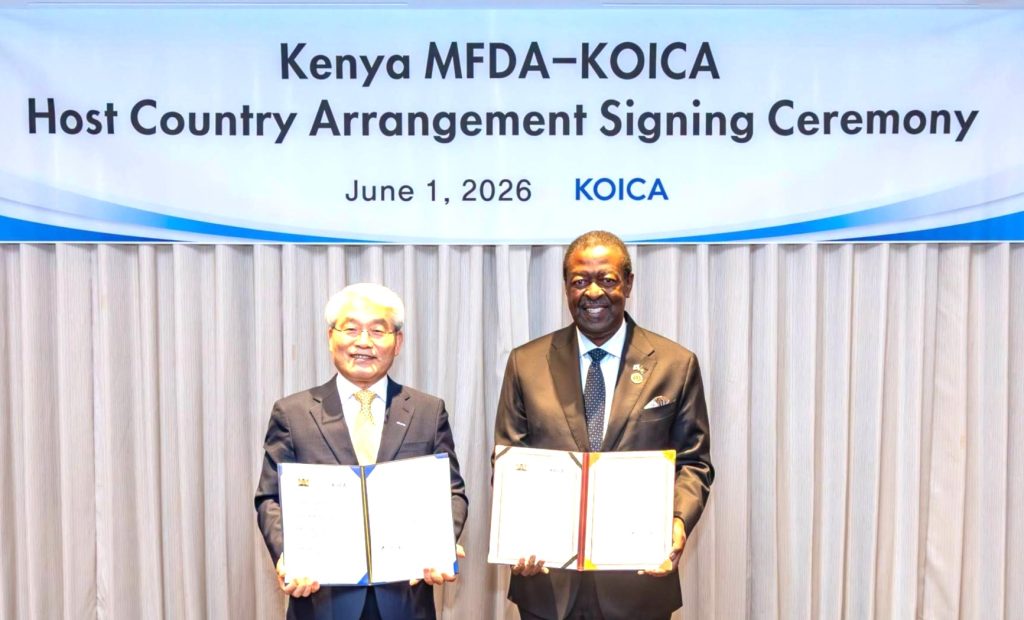
“Certainly, African states must adopt a forward-looking and people-centred approach driven by diversified partnerships such as the Korea-Africa relations, trade and investment rather than aid dependency, and a focus on manufacturing and value addition to their vast natural resources, including critical minerals,” he said.
The Foreign Affairs Cabinet Secretary noted that the African Continental Free Trade Area (AfCFTA) provides a major opportunity for Africa to strengthen intra-African commerce while enhancing its bargaining power in global markets.
He commended South Korea for supporting the objectives of the AfCFTA and called for increased collaboration in mineral and agricultural value chains to help Africa move up the industrial ladder.
Such investments, he said, would support job creation, promote value addition, and enhance the continent’s ability to supply competitive products to Korean and international markets.
Mudavadi also encouraged South Korea to expand its institutional presence in Africa, saying this would help build confidence among Korean investors and provide direct access to information on business opportunities across the continent.
“Being on the ground makes a significant difference, as it enables institutions to engage directly with our peoples and respective private sectors,” he said.
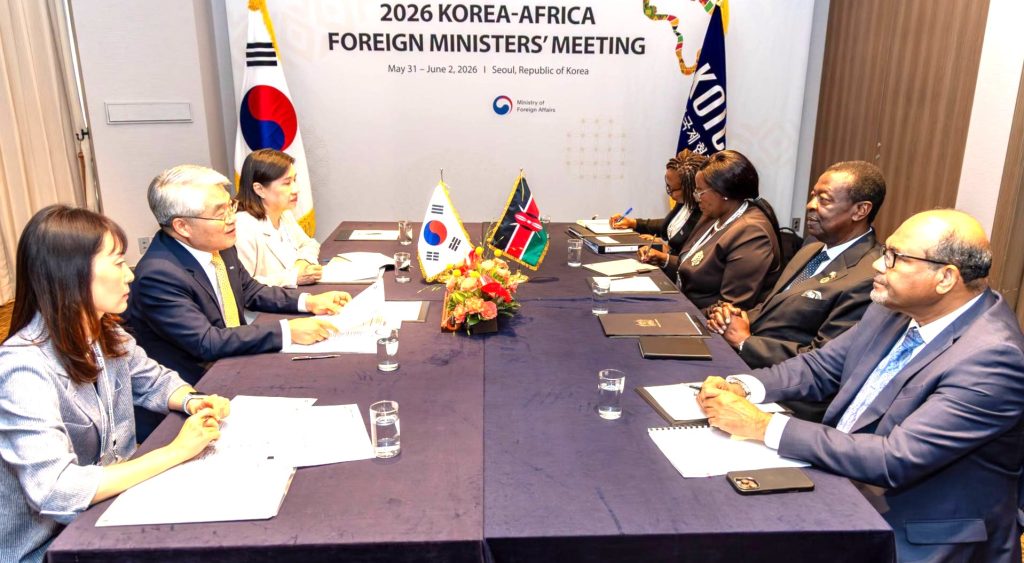
Kenya, he noted, has benefited from South Korea’s development partnership through investments in technology, education, infrastructure, and innovation.
He highlighted South Korea’s support for Konza Technopolis, Kenya’s flagship smart city project, as well as the recently commissioned Kenya Advanced Institute of Science and Technology (Kenya-AIST), which is modelled after the Korea Advanced Institute of Science and Technology (KAIST).
“The Korean government remains Kenya’s leading partner in technology and the digital economy,” Mudavadi said.
He added that other ongoing and planned projects include the Nairobi Intelligent Transport System (NITS), the K-Rice Belt Initiative aimed at boosting food security, scholarship programmes for students and civil servants, and cultural and tourism exchanges.
Mudavadi pointed to South Korea’s remarkable economic transformation as an example for African nations seeking rapid development.
“The Republic of Korea has undergone an impressive economic transformation, lifting its people out of poverty in less than a century,” he said, adding that Kenya hopes to draw lessons from that experience as it pursues its own development agenda.
The Cabinet Secretary stressed that youth empowerment should remain central to Korea-Africa cooperation, noting that more than 70 per cent of Kenya’s population is made up of young people.
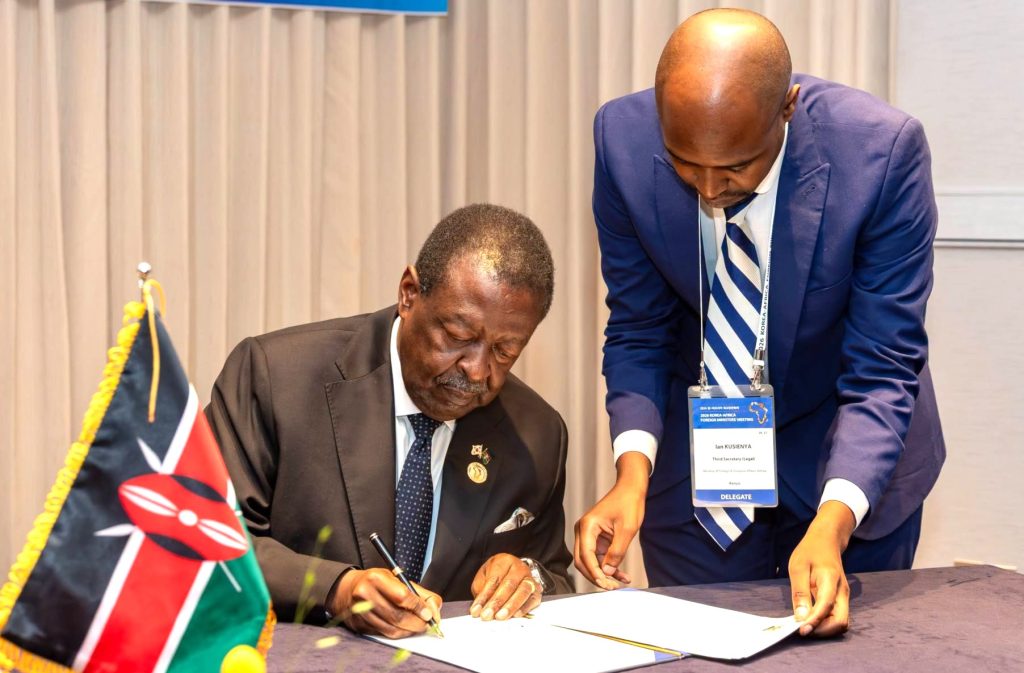
He said investments that generate jobs, encourage technology transfer, and promote entrepreneurship are essential for long-term stability and prosperity.
Beyond trade and investment, Mudavadi called for closer cooperation in addressing global challenges, including climate change, health emergencies, and supply chain disruptions caused by conflicts in different parts of the world.
He also urged South Korea to support African countries facing the threat of Ebola resurgence in Eastern and Central Africa through international mechanisms such as the World Health Organization.
He further appealed to South Korea to support Africa’s push for reforms of global governance institutions and the international financial architecture to ensure they are more equitable and inclusive.
Mudavadi reaffirmed Kenya’s commitment to strengthening relations between Africa and South Korea and called for the implementation of practical, time-bound programmes that deliver tangible benefits to citizens.
“Together, we should defend multilateralism and advocate for reforms of the United Nations and the international financial architecture to be fair, equitable and inclusive. We should prioritise trade and investment, strengthen domestic manufacturing and enhance value addition within our countries, rather than exporting raw materials in their unprocessed form,” he said.
He reiterated Kenya’s readiness to work with fellow African countries and South Korea to deepen economic ties and advance mutually beneficial partnerships built on shared prosperity and sustainable growth.
The summit discussed the current geopolitical instability, the current situations in Ukraine and the Middle East and the impact on the global economy, and the global food security situation.
The foreign ministers noted the growing strategic importance of Africa especially with regard to maritime routes and resources, including minerals.
“We further viewed this as a valuable opportunity to deepen and strengthen relations between Korea and Africa. We note the importance of reinforcing institutional frameworks and improving mutual access through key agreements, as appropriate in due consideration of having comprehensive economic partnerships for the achievement of shared prosperity and sustainable growth.” read part of the communique from the deliberations of the meeting.
The meeting also welcomed continued effort to promote Korean investment in Africa’s key infrastructure areas, strengthening industrial collaboration, capacity building, And mutually beneficial economic growth across the continent.