
How flowers, tears marked Kwibuka 32 as Rwanda renewed call for unity
KIGALI, Rwanda: A quiet, heavy silence engulfed Kicukiro District and the rest of the country on Sunday, April 12, as Rwandans gathered with flowers in their hands and tears in their eyes to mark Kwibuka 32.
From the elderly who lived through the horrors of 1994 to children born decades later, communities turned out in large numbers, united in grief, remembrance and a shared resolve to safeguard peace.
Many clutched white flowers symbols of love, loss and dignity as they made their way into memorial grounds, their faces marked by pain that time has not erased.
“I bring flowers every year because I never got the chance to bury my family,” said Beatrice Mukarugwiza, her voice trembling as tears rolled down her cheeks. “This is the only place I can come and feel close to them.”
Across Kigali and beyond, normal life slowed as the country observed the annual commemoration.
Church services, community gatherings and memorial visits were held in honour of more than one million lives lost during the 1994 genocide against the Tutsi.
In Kicukiro, one of the areas that witnessed some of the most brutal killings, residents walked quietly into the memorial grounds, many unable to hold back their emotions.
An elderly man, leaning on a walking stick, removed his hat as he placed a single flower on the ground. Moments later, he broke down.
“I lost everyone,” he said softly. “My parents, my brothers, my children. I come here so they are not forgotten.”
Nearby, a young girl held tightly onto her mother, clutching a small bouquet as tears streamed down her face an image that captured the intergenerational weight of remembrance.
Thirty-two years on, the pain of 1994 remains vivid among survivors, many of whom continue to relive the trauma each April.
But for the younger generation, the experience is different and inherited memory shaped through stories, education and national reflection.
“I did not see what happened, but I feel it through my family,” said Claudine Uwase, a university student. “It is our responsibility to carry this memory and protect our country.”
During the genocide, thousands of civilians fled to the former ETO Kicukiro seeking protection under United Nations peacekeepers.
However, when foreign troops withdrew, those who had sought refuge were left exposed and forced to move toward Nyanza, where many were killed.
Today, the site stands as a solemn memorial, drawing thousands each year during the Kwibuka period.
Across the memorial grounds, mourners were largely dressed in black, symbolising grief, with some incorporating white elements to signify hope and renewal.
There were no bright colours, no distractions only a quiet uniformity that underscored the seriousness of the occasion.
Among women, the traditional umushanana could be seen, its flowing elegance blending cultural identity with remembrance.
“It is our way of showing respect,” said Emmanuel Ntirenganya, a resident. “Even how we dress reflects how we honour those we lost.”

Conversations were hushed, movements slow, as mourners reflected deeply on the past.
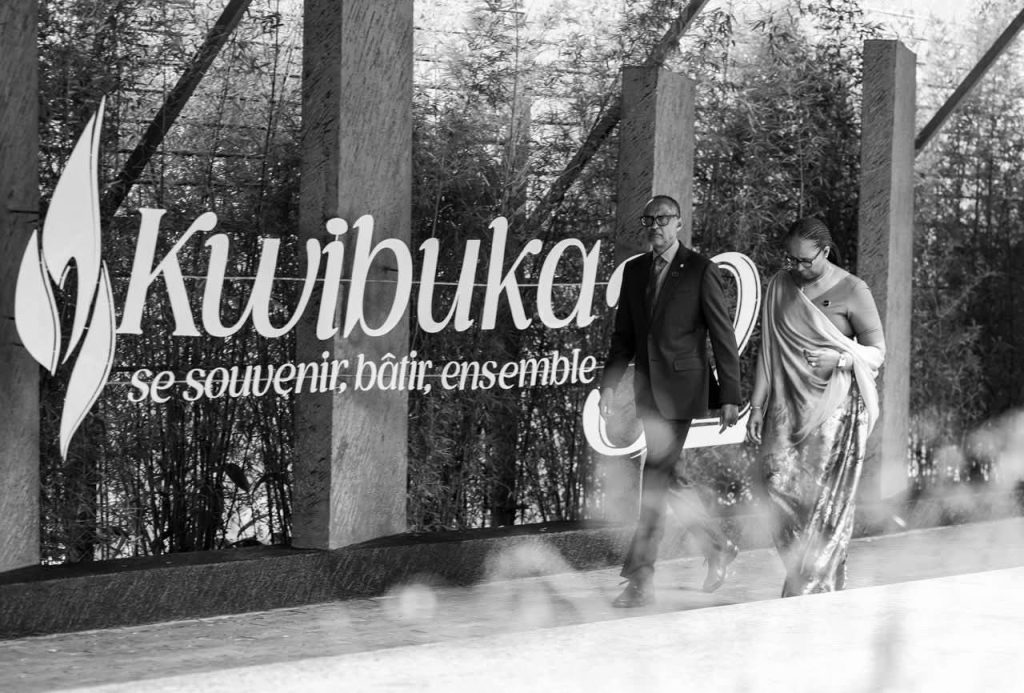
President Paul Kagame, in his Kwibuka 32 address, called on Rwandans to remain united and vigilant in protecting the country’s peace and stability.
“We remember so that what happened here never happens again,” he said. “Our unity is our strength, and it must never be taken for granted.”
His message resonated strongly among those gathered, reinforcing the importance of collective responsibility in preventing division and violence.
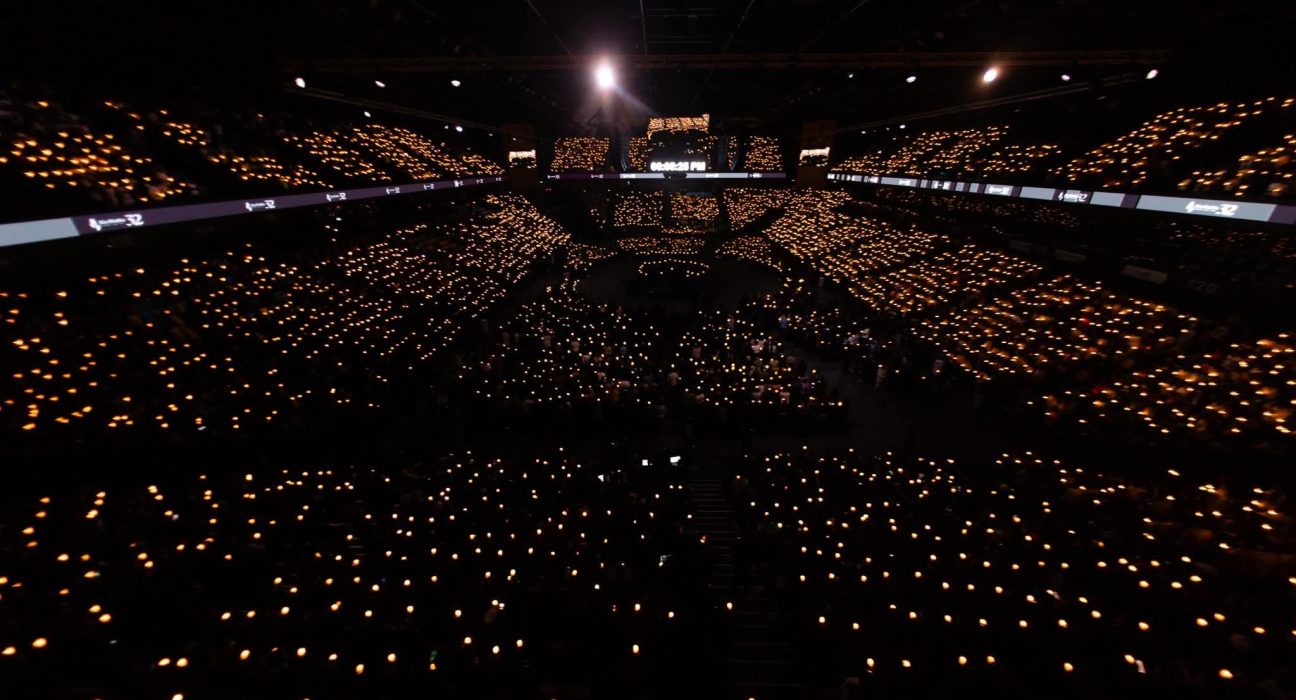
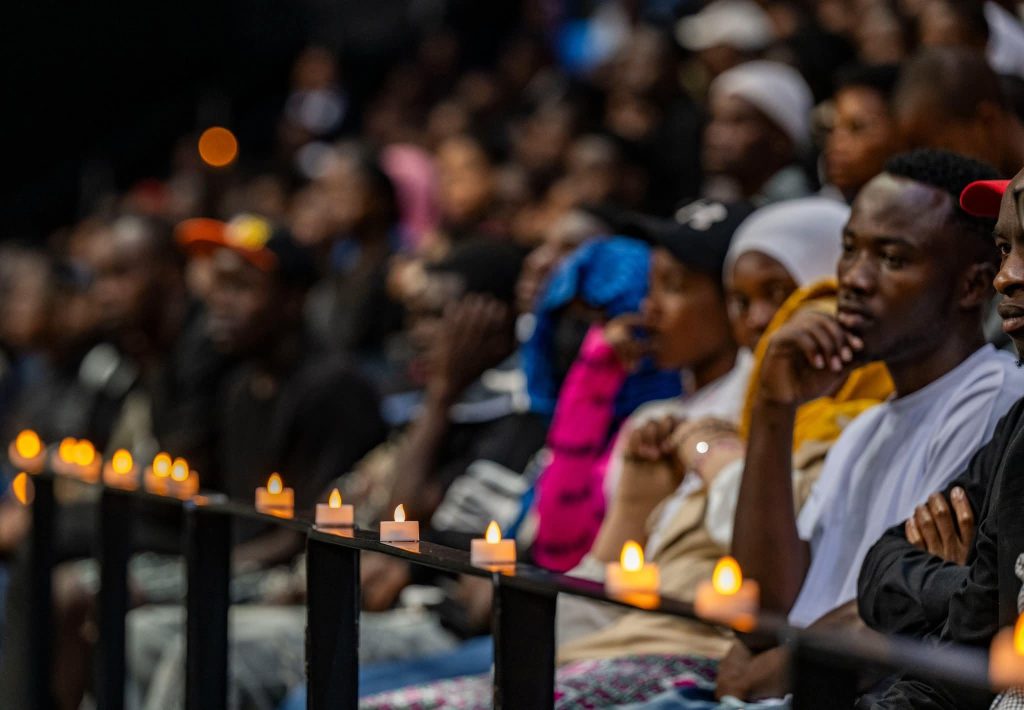
As dusk fell, candles were lit across Kicukiro and other parts of the country, their soft glow illuminating faces still wet with tears.
Some mourners remained seated in silence, while others stood in quiet reflection, reluctant to leave the grounds.
A message read during the commemoration captured the spirit of the day: “32 years ago, the sky grew quiet over Rwanda. Pain filled the land. Many lives were lost. Many dreams disappeared. But hope did not die. Today, we remember. We carry their names. We carry their light. We choose peace and we promise: Never Again.”
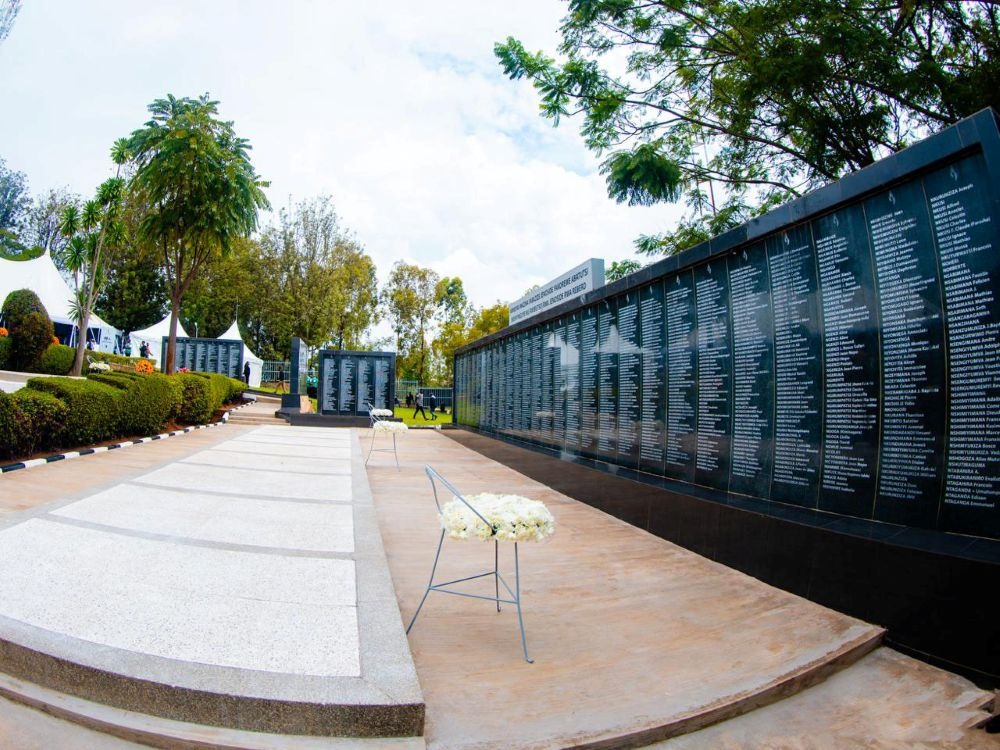
As the crowds slowly dispersed, flowers remained scattered across the memorial grounds silent symbols of lives lost but never forgotten.
For many, the tears shed were not just for the past, but for a future they are determined to protect.
In Rwanda today, remembrance is not only about mourning.
It is about unity.
It is about resilience.
It is about a promise shared by generations that such tragedy will never be allowed to happen again.
Tuzahora twibuka.