




The Nile in Peril: Africa’s longest river faces uncertain future as climate crisis tightens grip

BURUNDI / KHARTOUM / CAIRO: It begins as a mere trickle in the mist-cloaked hills of Burundi, gathers strength in the lush, rain-soaked valleys of Rwanda, and swells into a powerful current as it flows out of Lake Victoria in Uganda.
Over an epic distance of 6,650 kilometres roughly the span between Cape Town and Oslo the Nile River snakes northward across eleven countries before finally fanning into the Mediterranean Sea through Egypt’s fertile delta.
For millennia, this river has been the cradle of civilization, watering crops, powering homes, sustaining livelihoods, and connecting more than 300 million people from the Great Lakes to the deserts of North Africa.
Yet today, this ancient lifeline stands at a dangerous crossroads, threatened by the relentless advance of climate change.
The Nile’s journey is a geographical epic that weaves together diverse and fragile landscapes across Burundi, Rwanda, Tanzania, Uganda, South Sudan, Sudan, Ethiopia, the Democratic Republic of Congo, Kenya, Eritrea, and Egypt.
Its two great tributaries the White Nile, rising near Lake Victoria, and the Blue Nile, flowing from Ethiopia’s Lake Tana converge dramatically in Khartoum, Sudan’s capital, forming a powerful artery that has defined Africa’s story for thousands of years.
“Without the Nile, Egypt would simply not exist,” says Dr. Fatima El-Sayed, an environmental scientist based in Cairo.
“It provides 97 percent of our freshwater. Every aspect of our economy, our food, our cities all of it depends on this river.” But signs of strain are becoming impossible to ignore.
Rainfall patterns that were once predictable have become erratic. Seasons of crippling drought are followed by catastrophic floods.Rising global temperatures are accelerating the melting of glaciers that feed the river’s headwaters, while soaring evaporation rates threaten to rob it of precious flow.
Scientists now warn that without urgent climate action, the Nile’s water volume could shrink by as much as 25 percent by 2050.
For communities along its banks, the consequences are already unfolding. In Rwanda’s Nyamagabe District, Marie Uwimana, a 52-year-old maize farmer, says her yields are declining.
“We call the Nile umugisha a blessing,” she says. “But the rains are no longer reliable. The soil is drying. Our harvests get worse every year.”
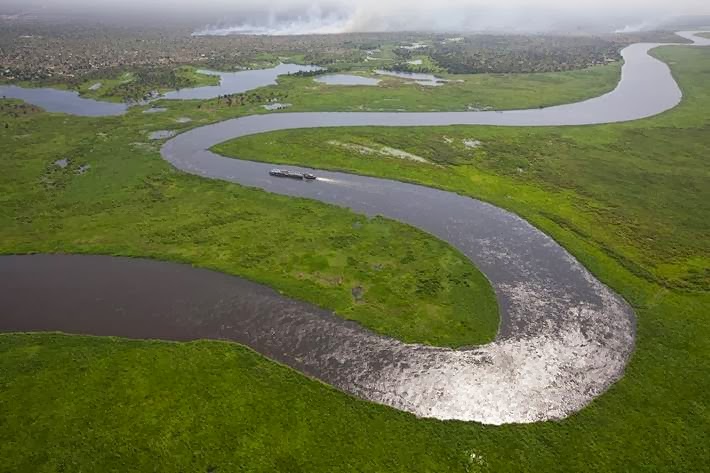
In South Sudan’s vast Sudd wetlands, pastoralists are watching their way of life disappear. Abraham Lado, a cattle herder from Jonglei State, laments, “Our cattle are dying. Sometimes the land floods too much, sometimes it dries up completely.
We move farther each season to find water.” The health impacts are equally severe. In northern Uganda, outbreaks of cholera and typhoid have surged as communities resort to unsafe water sources during dry spells.
In Sudan, doctors report rising malnutrition rates as irrigation systems fail and harvests decline.
“Climate change is rewriting the health map of the Nile Basin,” warns Dr. Nyaruach Manyang, a public health officer in Juba. “When water disappears, sanitation collapses. Food production drops. Diseases spread faster and wider.”

The geography of this crisis tells a sobering story. In the forested highlands of Burundi and Rwanda, deforestation and shifting rainfall are degrading the river’s sources. Across Tanzania and Uganda, rising temperatures are accelerating evaporation from lakes. In South Sudan, shrinking wetlands are losing their ability to filter and store water naturally.
Further downstream, Sudan and Ethiopia the basin’s agricultural heartlands face mounting water stress, while in Egypt, rising Mediterranean sea levels are pushing saltwater deep into the Nile Delta, poisoning fertile soils and threatening the nation’s breadbasket.
“We are approaching a tipping point,” warns Dr. Alemayehu Bekele, a hydrologist at Addis Ababa University. “What happens in the headwaters now will shape the destiny of the entire river. And that destiny will decide whether millions eat or starve.”
The changing Nile is also deepening geopolitical tensions. Upstream nations, led by Ethiopia, are racing to harness the river’s power for hydropower and irrigation, while downstream countries like Egypt and Sudan fear reduced flow could jeopardise their very survival.
“The Nile has always demanded diplomacy,” says Prof. John Ochieng, a water policy analyst in Nairobi. “But climate change is making that diplomacy urgent. We either share water or we share suffering.”
Over the past five years, scientific data and satellite observations have revealed just how fragile the Nile’s system has become.
Though its waters continue to flow through eleven nations, they now do so with growing volatility, fluctuating reservoir levels, and more frequent extremes of both drought and flood. Sentinel and altimetry-based data collected between 2014 and 2021 show that reservoir levels downstream of Ethiopia’s Grand Ethiopian Renaissance Dam (GERD) have fluctuated significantly without a clear long-term trend, with peak highs and lows recorded in late 2020.
Lake Nasser and Roseires Reservoir have shown similar variability, with seasonal levels swinging but without a consistent pattern of decline.

The extremes, however, tell their own story. In 2020, Sudan experienced its worst floods in over a century, with the Blue Nile rising above 17 meters and destroying thousands of homes.
Two years later, in 2022, persistent rains pushed water levels in Khartoum to 16.42 meters, well above the critical flood stage. Meanwhile, Lake Nasser has overflowed multiple times between 2019 and 2022, forming the Tushka Lakes a sign of erratic hydrology upstream.
These patterns point to a climate system that is increasingly unpredictable. The Blue Nile, which contributes nearly 60 percent of the river’s total flow, has shown a long-term downward trend falling from an average discharge of 1645 m³/s (1912–1964) to 1478 m³/s (1964–2012), a decline of about 13–14 m³/s per decade.
Over the shorter 2019–2024 window, the picture is more volatile, with some tributaries showing small declines while others swing wildly from flood to drought.
The swing between flood years and drought years is becoming more extreme, leaving reservoir managers and farmers struggling to adapt.
Record-breaking floods like those in 2020 and 2022 are becoming more common, straining infrastructure and displacing thousands. Prolonged dry spells are depleting groundwater and shrinking water supplies.
Natural variability from El Niño cycles to shifting monsoon patterns further complicates the picture, sometimes masking underlying declines.
The filling of the GERD, underway since 2020, has also altered upstream flow regimes, reshaping water availability downstream and intensifying disputes.
On the ground, the impacts are being felt in every corner of the basin.
In Khartoum, water-level watchers recall 2020 as “the year the Nile swallowed the city,” with water rising so quickly that readings shifted by metres in weeks.
In Sudan’s Gezira region, farmers say that post-flood silt and erosion have clogged irrigation canals, limiting their ability to capture water even when it is available.
In Ethiopia’s highlands, watershed managers report that heavier, shorter bursts of rain are causing rapid runoff, reducing infiltration and weakening long-term baseflow into the Blue Nile.

Back in Aswan, where the river glides beneath temples built by ancient pharaohs, the Nile’s enduring power seems unchanged but experts warn that appearances are deceiving.
The river that nourished empires is now at the mercy of decisions made by today’s governments. Restoring upstream forests, investing in water-saving technologies, protecting wetlands, and strengthening transboundary cooperation are no longer optional they are existential.
“The Nile is not just a river,” Dr. El-Sayed reminds us. “It is the bloodstream of a continent. If it dries, Africa’s heart will stop beating.”
The last five years have served as a warning the Nile is no longer a guaranteed constant in Africa’s story. Its rhythms are shifting, its extremes are intensifying, and its people are being forced to adapt to a new reality.
Whether the next five years bring stability or disaster will depend on choices made now choices about climate action, water management, and international cooperation.
The fate of the Nile is a test of humanity’s ability to live within nature’s limits and right now, that test is far from over.


