



Ngũgĩ wa Thiong’o: The Kenyan literary giant who gave Africa its voice
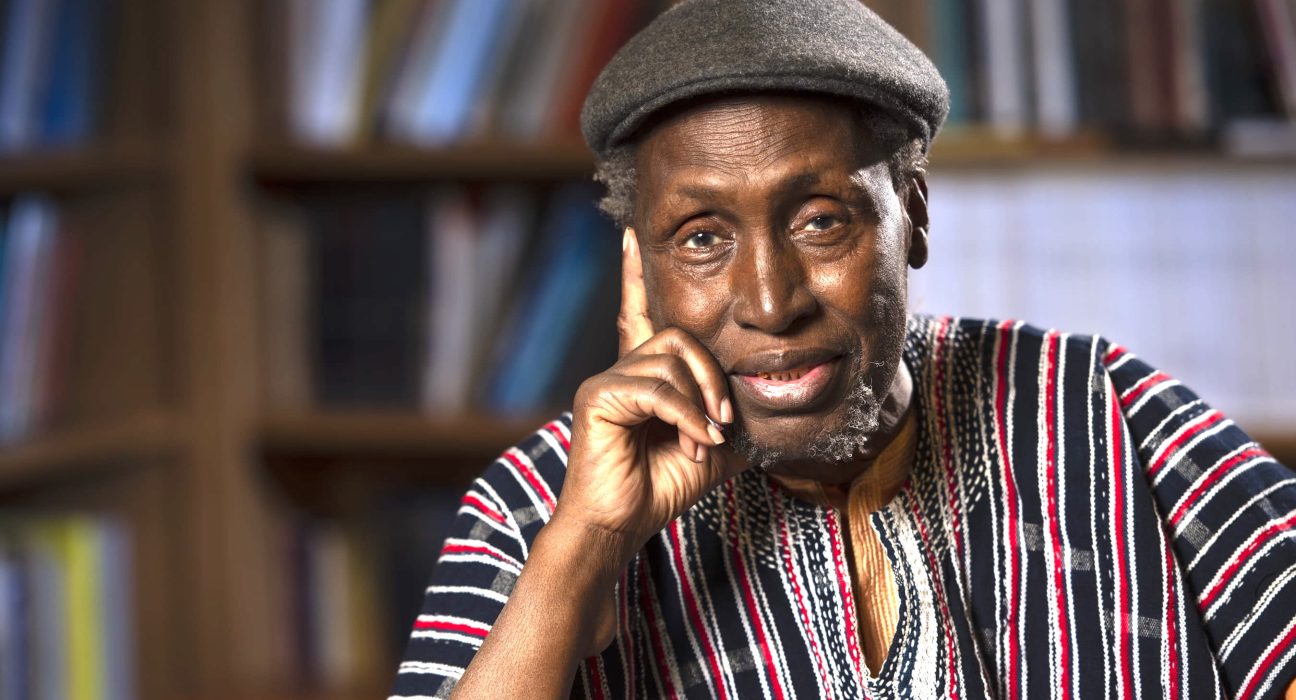
Renowned Kenyan author, academic, and literary icon Prof. Ngũgĩ wa Thiong’o, whose bold words challenged colonial power and reclaimed African identity through language, has died. He was 86.
Born in Kamiriithu village, near Limuru on January 5, 1938, Ngũgĩ rose from humble beginnings in colonial Kenya to become one of the most influential writers on the continent, leaving behind a towering legacy of over 30 published works and a global movement for linguistic and cultural decolonisation.
“Ngũgĩ was more than a writer. He was the conscience of our post-colonial era a fearless defender of African identity and language,” said the poet , a literature lecturer and cultural commentator.
Ngũgĩ began his education at Alliance High School, one of colonial Kenya’s most elite African schools, before proceeding to Makerere University in Uganda, where he wrote his debut play The Black Hermit. He later earned his undergraduate degree from Leeds University in the UK, where he encountered radical thinkers like Frantz Fanon and Karl Marx voices that would shape his revolutionary literary path.
His debut novel, Weep Not, Child (1964), was the first English-language novel by an East African. The work examined colonial violence and generational trauma through the eyes of a young boy ushering Ngũgĩ into the literary spotlight. He followed it with The River Between (1965) and A Grain of Wheat (1967), both exploring cultural conflict and betrayal during Kenya’s struggle for independence.
“He didn’t just write fiction he wrote resistance,” said Prof. Simon Gikandi, Chair of English at Princeton University. “Every word Ngũgĩ wrote was an act of reclaiming memory.”
Ngũgĩ’s boldest confrontation with power came in 1977 with the co-writing and production of the play Ngaahika Ndeenda (I Will Marry When I Want) in his native Gikuyu. Staged in an open-air theatre in Kamiriithu village, the play condemned greed, land grabbing, and inequality among Kenya’s post-independence elite.
The play’s immense popularity and its sharp political undertones did not sit well with President Daniel arap Moi’s regime. In December 1977, Ngũgĩ was arrested and detained without trial under the colonial-era Public Security Act. He was imprisoned in Kamiti Maximum Security Prison for over a year.
While in solitary confinement, he did not relent. He composed his next novel, Caitaani Mutharaba-Ini (Devil on the Cross), in Gikuyu written entirely on prison-issued toilet paper using a smuggled pen.
“They imprisoned his body, but they could not silence his mind,” said longtime friend and lawyer Gitobu Imanyara, who later defended Ngũgĩ during attempts to suppress his post-release political activities. Imanyara would go on to found The Nairobi Law Monthly, a reformist journal inspired by Ngũgĩ’s fearless voice.
International outcry from Amnesty International, PEN International, and numerous global scholars pressured the Kenyan government to release him in December 1978. However, following continued state surveillance and harassment, Ngũgĩ fled the country in 1982 beginning his long years in exile.
His decision to abandon English and write exclusively in Gikuyu was not merely symbolic it was political. In his influential book Decolonising the Mind (1986), he argued that colonial languages were tools of control and that true freedom demanded cultural and linguistic sovereignty.
“Language carries culture, and culture carries the body of values by which we perceive ourselves and our place in the world,” Ngũgĩ wrote.
This belief became the cornerstone of his scholarship and activism abroad, where he taught at Yale, NYU, and eventually the University of California, Irvine, as Distinguished Professor of English and Comparative Literature.
Though physically away from Kenya, Ngũgĩ never detached himself from the pulse of African affairs. His memoirs, Dreams in a Time of War (2010) and In the House of the Interpreter (2012), reflect deeply on colonial memory, exile, and the burdens of truth.
He was frequently tipped as a contender for the Nobel Prize in Literature, and his books were translated into more than 60 languages. He received numerous global awards and honorary doctorates but remained humble, rooted in the belief that literature must serve the people.
In 2004, he made a much-publicized return to Kenya but even then, his homecoming was marred by political friction: armed men broke into his Nairobi apartment, assaulted his wife, and attempted to intimidate him. Many saw the attack as a grim reminder that speaking truth to power remained a dangerous act.
“Ngũgĩ came back not to be celebrated, but to remind Kenya of its unfinished business with justice,” said activist Boniface Mwangi.
From his village stage to global lecture halls, Prof. Ngũgĩ wa Thiong’o’s life was a testament to the enduring power of words. He taught the world that writing could be an act of liberation, and that culture when reclaimed can be a weapon of peace and power.
He is survived by his children, many of whom have followed in his academic and creative footsteps.
“To live in hearts we leave behind is not to die,” the poet Thomas Campbell once wrote. In the heart of African literature, Ngũgĩ wa Thiong’o lives on.
Books by Ngũgĩ wa Thiong’o (Selection) include:
- Weep Not, Child (1964)
- The River Between (1965)
- A Grain of Wheat (1967)
- Petals of Blood (1977)
- Devil on the Cross (1980)
- Matigari (1986)
- Decolonising the Mind (1986)
- Moving the Centre (1993)
- Dreams in a Time of War (2010)
- In the House of the Interpreter (2012)


