






Heat, hunger and hardship: How climate change is testing Bungoma farmers and the future of food
Kenya farmlands of Bungoma County, the dawning sun should signal promise for a new planting season.
Instead, it brings an early, relentless heat that farmers say is no longer simply “weather” but something far more ominous.
At 6:30 a.m., John Simiyu, a third-generation smallholder farmer, walks among his fields of sugarcane, kale, tomatoes, onions and Irish potatoes crops that once flourished under the region’s normally moderate climate.
This season, however, the sun arrives earlier and refuses to relent. “Even before we start our work, the heat is already pressing down,” he says, shading his eyes from sun that now peaks well above historical averages.
For Simiyu and farmers like Mike Wamukota, rising temperatures are transforming the rhythms of cultivation, harvest and survival and threatening the very backbone of Bungoma’s rural economy.
Agriculture is the lifeblood of Bungoma County. About 78 % of households depend directly on farming, and most cultivation is rain-fed rather than irrigated, making farmers highly susceptible to climate variability and extremes.
Moisture stress, erratic rainfall patterns, and rising temperatures now heighten the risks of pests, diseases and post-harvest losses, undermining crop yields and food security.
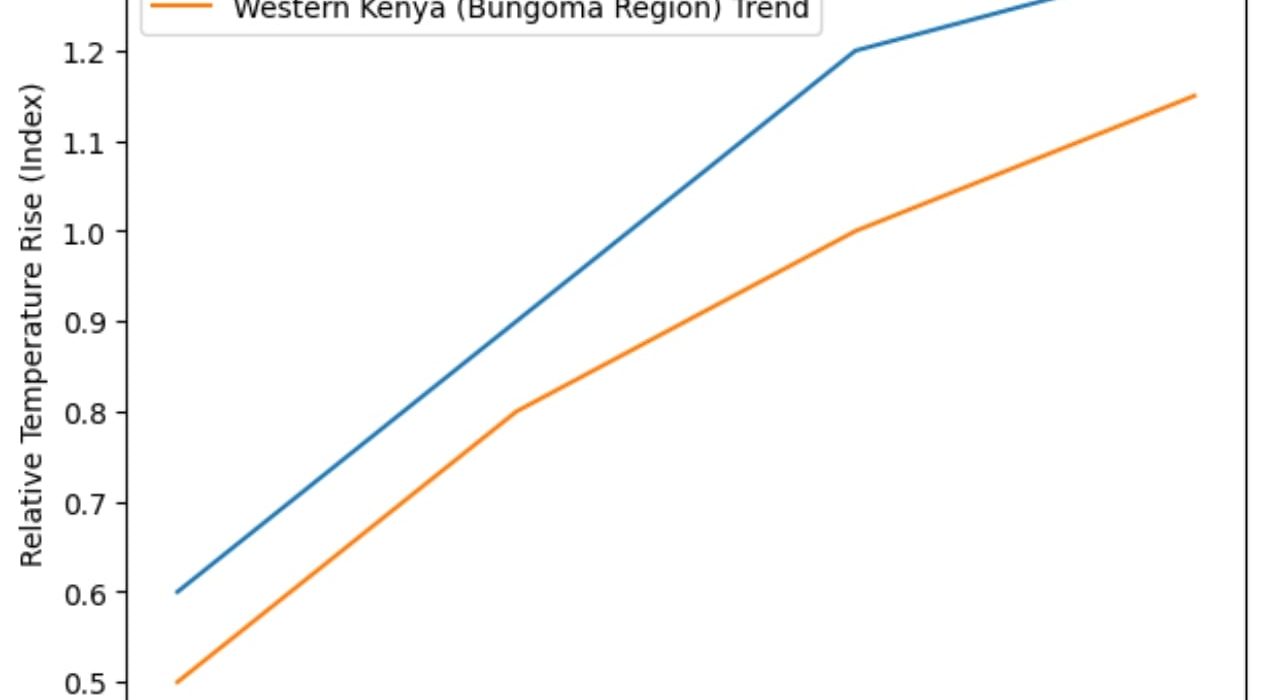
The Kenya Meteorological Department (KMD) confirms a hotter climate reality: 2024 was the warmest year on record in Kenya, with above-average temperatures experienced across most parts of the country, including western highland regions like Bungoma.
Although the western highlands did not record the most extreme heat, the warming was widespread and persistent, breaking with long-standing seasonal norms.
Typically, Bungoma’s farming calendar revolves around the long rains and short rains, which have historically guided planting cycles. But rising temperatures shorten soil moisture retention, increase evaporation rates, and make planting windows less predictable.
Where maize, vegetables and Irish potatoes once enjoyed cool nights and steady moisture, farmers now grapple with diurnal heat spikes that stress plant physiology and stunt growth.
“We used to expect cool mornings through much of the season,” says Wamukota, gazing out at a wilting patch of Irish potatoes. “Now the day warms up so quickly that even crops that like milder heat struggle to thrive.”
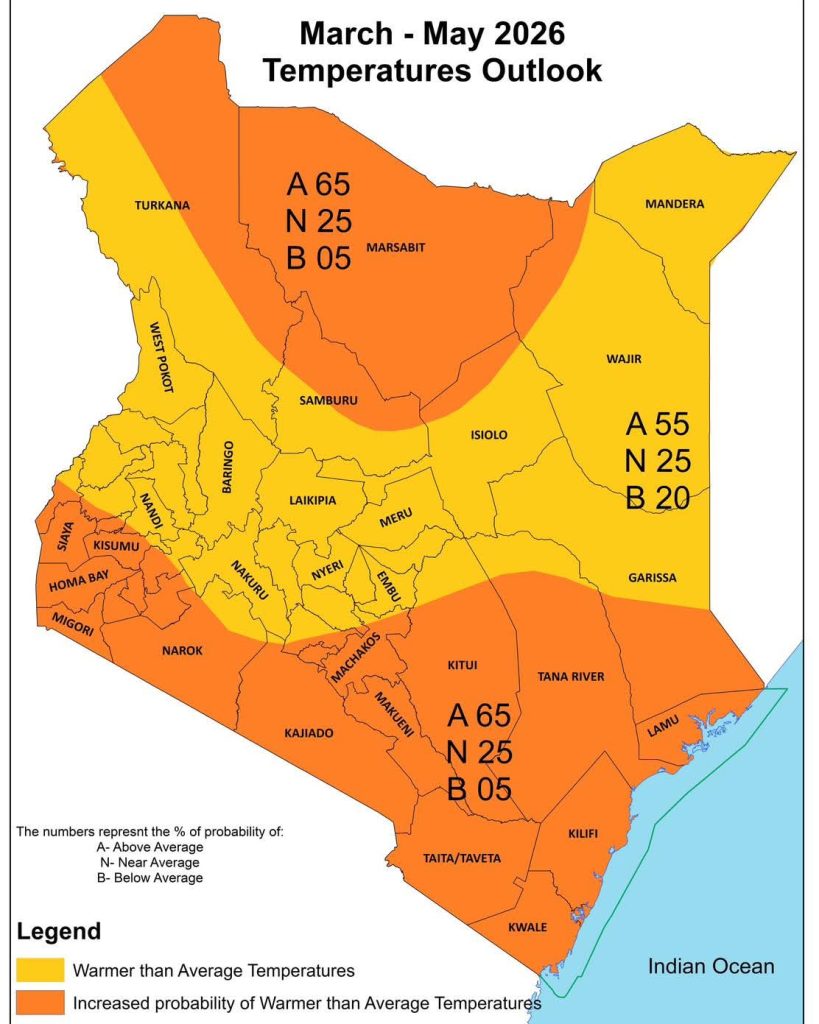
Climate change doesn’t only mean heat. It means shifting rainfall patterns and extremes. KMD data shows that while western and central highlands received above-average rains in 2024, most other regions of Kenya experienced drier-than-normal conditions.
The inland variability has broad implications: intense bursts of rain can lead to soil erosion, while prolonged dry spells leave fields parched.
For farmers who rely on consistent soil moisture to sustain crops like kale, tomatoes and onions, these alternating extremes flash floods followed by extreme dryness complicate traditional farming methods and reduce predictability.
Bungoma County officials describe the effects of climate hazards as multifaceted. Climatic shocks notably high temperatures have contributed to low agricultural productivity, increased crop failure, water scarcity, and elevated pests and diseases.
When rains are unpredictable, farmers delay planting, risk higher post-harvest losses, and face food insecurity. Vulnerable groups such as women, children and the elderly bear the brunt of food and water shortages.
The county’s climate action planning acknowledges that adaptation capacity must improve. Yet funding gaps, low extension support for farmers, and a lack of formal climate education among rural producers weaken resilience efforts even as the climate challenge intensifies.
What Bungoma is experiencing fits into a wider continental pattern. The World Meteorological Organization (WMO) reports that 2024 ranked as either the warmest or second-warmest year on record for Africa, depending on the dataset used.
The average continental temperature was an estimated 0.86 °C above the 1991–2020 norm, and the last decade was the warmest in the historical record, underscoring the accelerating pace of warming across the continent.
This heat has cascading impacts: drought conditions in southern and eastern Africa, reduced crop yields, water scarcity, and expanded vulnerability for millions of people who rely on rain-fed agriculture.

Agriculture and food security are among the sectors most sensitive to climate stress, with unpredictable extremes undermining rural economies and livelihoods.
A 2024 WMO news release emphasizes that climate change is “hitting Africa hard,” with extreme weather including heatwaves, droughts, floods and sea surface temperature anomalies threatening lives and livelihoods while stressing health, education and water systems.
The agency also highlights opportunities through improved early warning systems and digital tools for building climate resilience.
Beyond Africa, global temperature trends reveal an even more daunting trajectory. United Nations climate assessments show that 2025 is poised to be among the warmest years ever recorded worldwide, continuing a multi-year streak of record-high global averages.
Median estimates from global datasets place recent annual heat at more than 1.4 °C above pre-industrial levels, edging toward thresholds scientists warn could exacerbate climate impacts across ecosystems and economies.
In a related forecast, scientists caution that temperatures between 2025 and 2029 could temporarily approach nearly 2 °C above pre-industrial levels, intensifying heat stress for agriculture, human health and water resources worldwide.
In Bungoma villages, responses take shape at the grassroots level. Some farmers are experimenting with crop diversification, adjusting sowing dates, and exploring soil moisture conservation techniques to cope with heat and rainfall variability.
Studies of Kenyan smallholders suggest that nearly all farmers consider climate change when selecting crops or altering farm practices a testament to on-the-ground awareness even in the absence of formal climate training.
Nevertheless, technical support, extension services and targeted climate finance remain essential. Kenya’s broader national climate strategies seek to boost agricultural resilience through smart practices and policy support, but implementation at county levels varies due to financial and institutional constraints.
For Simiyu, Wamukota and thousands of Bungoma farmers, the signs of climate change bring daily challenges: from seedlings scorched by midday heat to soil too dry for crop roots to access moisture. In a county where agriculture supports the majority of families and underpins food security, the stakes are high and adaptation is no longer optional but necessary.
“We know the climate has changed,” Wamukota says, pausing beside a struggling tomato patch. “Now we need the tools, the knowledge and the support to survive it.”

Data Climate by the Numbers
- 2024 was the hottest year on record in Kenya, with above-normal temperatures across the country.
- Rainfall was highly variable, with intense long rains in some regions and below-average short rains later, undermining agricultural predictability.
In Bungoma Agriculture employs the majority of households; climate variability has lowered yields, increased pests, and intensified moisture stress.
Africa 2024’s mean continental temperature was about 0.86 °C above 1991–2020 norms, one of the warmest years on record.
The Global 2025 is projected to be among the top warmest years globally, with warming near or above 1.4 °C above pre-industrial levels.
While WMO projections suggest global temperatures between 2025–2029 could approach a temporary 2 °C threshold, intensifying climate risks.


