


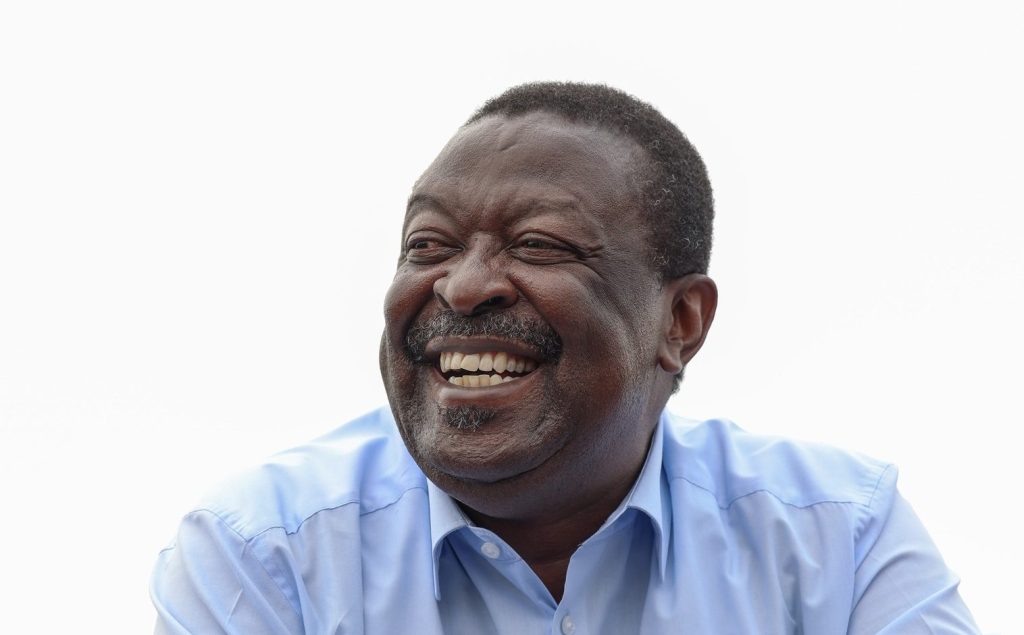


How the Quakers Church shaped Musalia Mudavadi’s character and career

Prime Cabinet Secretary Musalia Mudavadi is today arguably the most prominent public figure associated with the Quakers Church in Kenya.
Until his recent death and burial two weeks ago, former powerful Cabinet Minister Burudi Nabwera was the other known member of the church with enormous political and social influence.
Formally known around the world as the Religious Society of Friends, the church and its followers have internationally left their footprint through revolutionary reforms in the corridors of politics, commerce, culture, academia, trade unionism, democracy and human rights.
It is the only religious institution to secure a permanent seat on peace at the United Nations in Geneva.
Mudavadi and the late Nabwera are among the most visible members, both past and present, of the church, which is largely drawn from the western part of Kenya, where it was founded more than one-and-a-half centuries ago by three young American missionaries.
Other known Quakers include the Prime Minister’s late father, Moses Substone Budamba Mudavadi, who was a powerful minister in the Government of former President Daniel arap Moi; the late Cabinet ministers Joshua Mulanda Angatia, Elijah Mwangale and Soita Shitanda; as well as former United Nations Conference on Trade and Development (UNCTAD) Secretary-General Dr Mukhisa Kituyi.
Others are Higher Education Principal Secretary Dr Beatrice Muganda Inyangala, her Public Service counterpart, Prof. Jane Imbunya, renowned scientist Prof. Miriam Were and the late biochemist Prof. Norah Olembo.
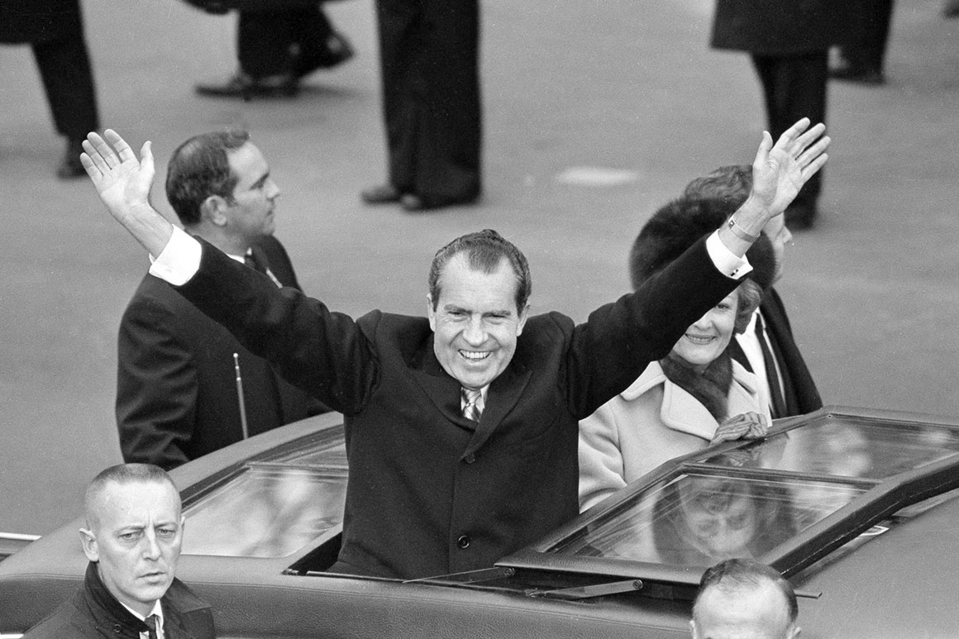
Outside Kenya, two former United States presidents, Richard Nixon and Herbert Hoover, were also members of the Friends Church, as was former First Lady Dolley Payne Madison, the wife of the fourth US President, James Madison.
Revered French philosopher Voltaire was so attracted to the Quakers’ teachings and beliefs that, during his three-year exile in Britain, he personally hired one of the church’s members as his tutor and even devoted four chapters to it in one of his books, although he himself did not convert.
Mudavadi was born and brought up as a Quaker in rural Vihiga County, western Kenya.
The former Deputy Prime Minister and one-time Vice-President is widely considered a calm, listening, reflective, humble, collected and hard-working team player, qualities that have their roots in the Friends Church, where they were instilled in him at a very early age.
The Quakers Church is founded on six strong pillars, which are understood to have greatly influenced Mudavadi’s character, both in public and private.
The sextet is summarised as SPICES: Simplicity, Peace, Integrity, Community, Equality and Stewardship.
The Friends Church is a Christian faith whose followers do not swear on the Bible but instead raise their right hands to affirm their testimony.
Mudavadi has, over the years, gone through that ritual whenever an opportunity has arisen for him to serve in public office.
The tradition has quite often placed the church in the spotlight, at times earning its followers persecution and segregation, especially in Britain and America.
The church’s faithful are of the strong view that speaking the truth is a consistent obligation that must be safeguarded at all times and does not, by any means, require an oath, as that, in itself, amounts to dishonesty, a lack of trust in oneself and tempting God.

On November 28, 1984, then United States President Ronald Reagan posthumously honoured William Penn, a British member of the church who founded the State of Pennsylvania in the 17th century, along with his wife, Hannah Callowhill Penn, by granting them honorary citizenship.
Penn was instrumental in formulating the statutes in Pennsylvania that the founders of the United States of America, George Washington, Thomas Jefferson and James Madison, would borrow from when compiling the American Constitution.
Bayard Rustin, the most influential organiser of the Civil Rights Movement and vice-chairman to Dr Martin Luther King Jr, belonged to that church.
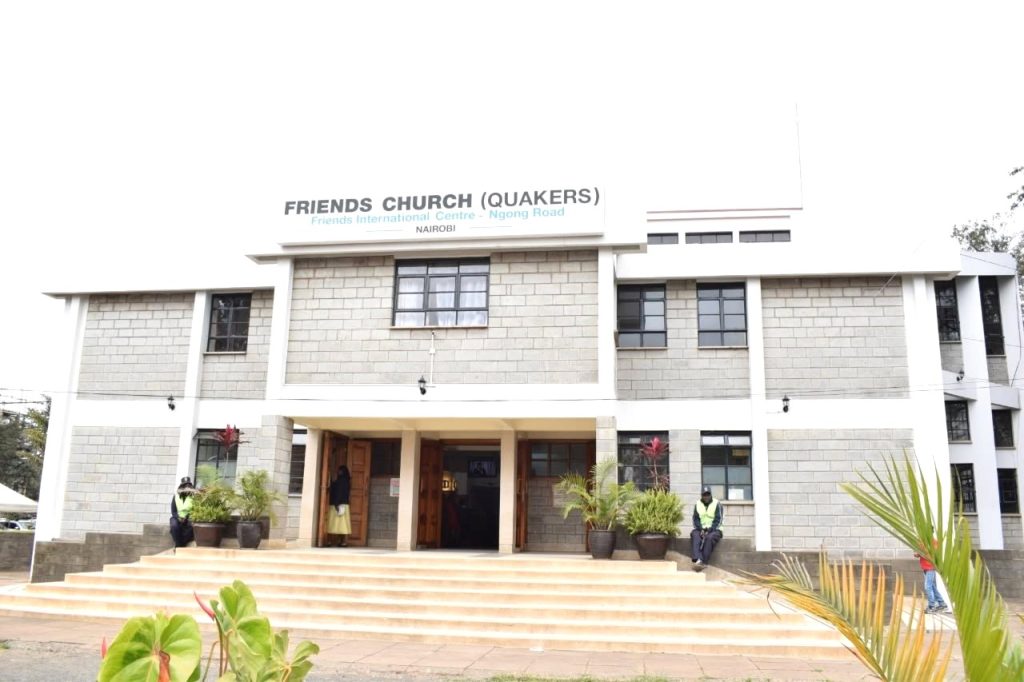
Sometimes radical and controversial, the Quakers are a highly ethical fraternity that first set foot in Kenya in 1902, when the Friends Church was established at Kaimosi in Vihiga County by three American missionaries — Willis R. Hotchkiss, Arthur B. Chilson and Edgar T. Hole — who had been sent by the Friends Africa Industrial Mission from Ohio, the United States.
Presently, the Quaker population in Kenya is estimated to be upwards of 200,000 members, the largest number in any country around the world.
The Religious Society of Friends is a breakaway Christian group from the Church of England.
It was started in the Midlands and north-west of England in the 17th century by a radical, young, inquisitive and provocative man known as George Fox, who challenged some of the practices of the Anglicans, such as excessive drinking of alcohol and promiscuity, which he believed contradicted Bible teachings.
Fox had always had reservations about the conduct of members of the Church of England from the age of 12, but it was in 1647, when he was 23 years old, that he opted to break away and establish the Religious Society of Friends.
Fox and his followers attracted many powerful enemies, especially from the monarchy and British aristocracy. Their strict adherence to the laid-down virtues meant that he and other members of the Society were ceaselessly persecuted for their beliefs, tortured and thrown in jail, where hundreds died.
It was while in the dock on one of these occasions that Fox teased the presiding magistrate to always quake whenever the name of God was mentioned in his presence.
Sticklers to the six virtues are uncompromising crusaders for and defenders of the rights, freedoms and liberties of every human being.
They are fearless Christians who do not take or give bribes, abhor business exploitation, and do not lie or bear false witness. They do not kill, steal or lie.
Quakers hold respected General Consultative Status at the United Nations through the Friends World Committee for Consultation (FWCC), their global umbrella body.
That status is the highest level of accreditation granted to non-governmental organisations by the UN, allowing them to operate official representation offices.
They operate through the Quaker United Nations Office (QUNO), with physical locations in Geneva and New York City. Quaker Houses, from where they maintain informal, off-the-record meeting spaces near the UN headquarters, host diplomats, UN staff and experts for quiet dialogue and consensus-building.
Their core focus is on areas of peace and disarmament, advocating against violent conflict and supporting peace-building systems. They also focus on human rights, working on refugee protections, conscientious objection and criminal justice reform, such as the rights of children of prisoners.
They also address the human and social impacts of global climate change.
The wealthy State of Pennsylvania in the United States was founded by exiled English Quakers and was even named after its founder, William Penn, who was later honoured posthumously by President Reagan.
The word ‘Sylvania’ is a Native American term that means woodlands, woods or forest. Thus, Pennsylvania means the woodlands or forest of Penn.
President Reagan and Congress honoured Penn for founding the Commonwealth of Pennsylvania as an experimental society based on representative government; promoting public education accessible to all people without regard to race, creed, sex or ability to pay; advocating religious freedom and freedom of conscience; creating a safe haven for Quakers and other religious minorities; pursuing peace and justice, including peaceful and fair-dealing relations with Native Americans; opposing war as a means of settling international disputes; and reforming the justice system, notably by substituting workhouses for prisons.
Quakers were also instrumental in the establishment of the states of New Jersey, North Carolina, Maryland, Virginia, Delaware and Rhode Island.

The Quakers Church has, to date, established more than five universities in the United States and more than 10 flourishing schools in the United Kingdom.
Quakers believe in peaceful resolutions of conflicts and abhor violence of any form. Initially, they were opposed to conscription into war, a practice that brought them into conflict with the monarchy in England, where they were killed, imprisoned or sent into exile because of their beliefs.
They believe in direct worship of God and that God the Creator ranks above any creature, including man.
That belief is one of the reasons that triggered a clash between Quakers and the English monarchy when worshippers resisted the move to prioritise the Crown ahead of God, famously declaring that the Cross comes before the Crown.
Quakers were key architects of the Industrial Revolution in England and were at the forefront of the abolition of slavery crusade in the US, the fight for the independence of the United States and the Civil Rights Movement of the 1950s and 1960s in that country.
On the global scene, the entrepreneurial conglomerates established by Quakers include Barclays Bank, Cadbury’s, Clarks footwear company and Lloyds Bank of London.
Friends School Kamusinga aside, other prominent learning institutions established by the Quakers in Kenya include Friends’ Kaimosi University, Chavakali High School, Alliance Boys’ and Girls’ High Schools, Musingu Boys’ High School, Kaimosi Girls’ High School, Lugulu Girls’ High School, Malava Boys’ High School, Friends’ Kaimosi Teachers College, Vokoli Girls’ High School and Kivaywa Boys’ High School, among others.
The prestigious Alliance schools were mooted in 1926 by the Alliance of Protestant Churches in Kenya, of which the Quakers Church was a prominent member.
Some of the medical institutions founded by Quakers in Kenya include Kaimosi Mission Jumuia Hospital, Lugulu Mission Hospital, Lirhanda Friends Mission Clinic and Sabatia Eye Hospital.
Mudavadi has declared that he will run for the presidency in 2032 to succeed incumbent William Ruto.
His conduct and religious background will be in sharp focus.
As a member of the Religious Society of Friends, he is certainly in a good place. Quakers do not disappoint.