


Busia’s Catherine Omanyo shines among top performing Woman Reps
Nandi Woman Representative Cynthia Muge and her Busia counterpart Catherine Omanyo have emerged as the country’s best-performing women representatives, according to a new survey assessing the performance of the 47 legislators over their four years in office.
The Timely Kenya Women Representatives Performance Rating 2026 places Muge first nationally with an overall score of 59.9 per cent, while Omanyo follows closely in second position with 59.1 per cent.
The survey, which evaluates the legislators’ performance between 2022 and 2026, attributes their strong showing to a combination of grassroots engagement, humanitarian interventions, utilisation of the National Government Affirmative Action Fund (NGAAF) and parliamentary contributions.
Muge’s first-place ranking is particularly reinforced by her performance in Parliament, where she emerged as the country’s best debater among women representatives. She also featured among the top five legislators with the highest number of bills, motions, petitions and parliamentary questions.
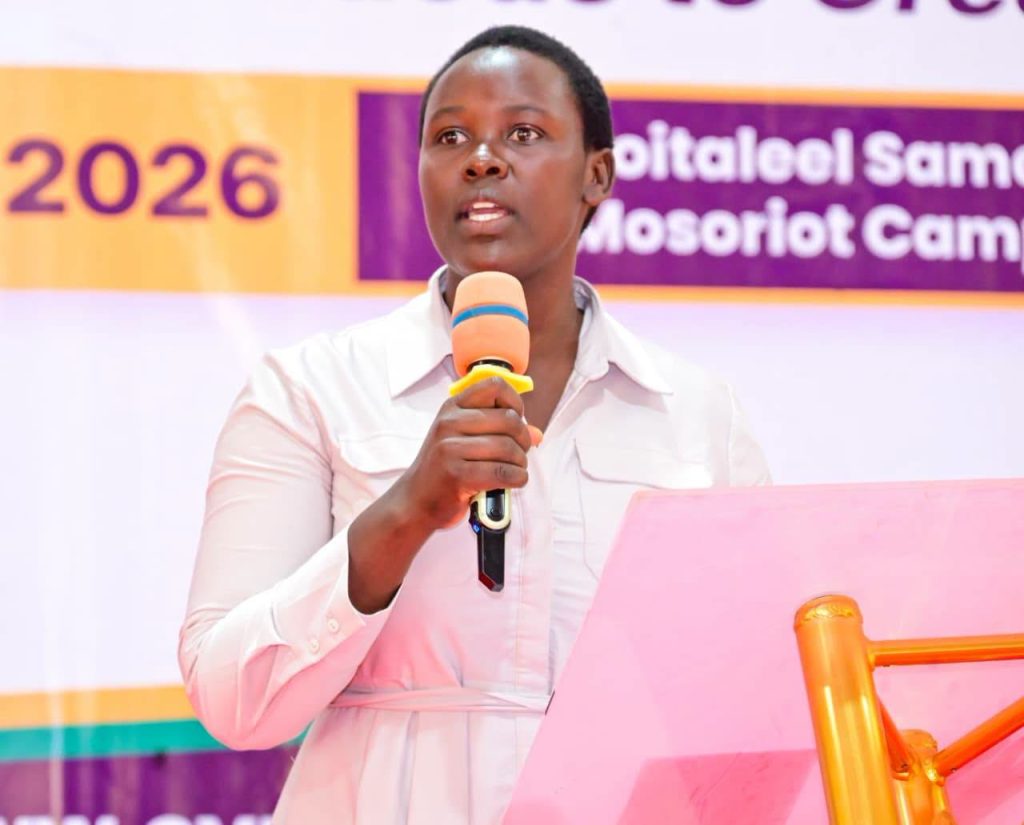
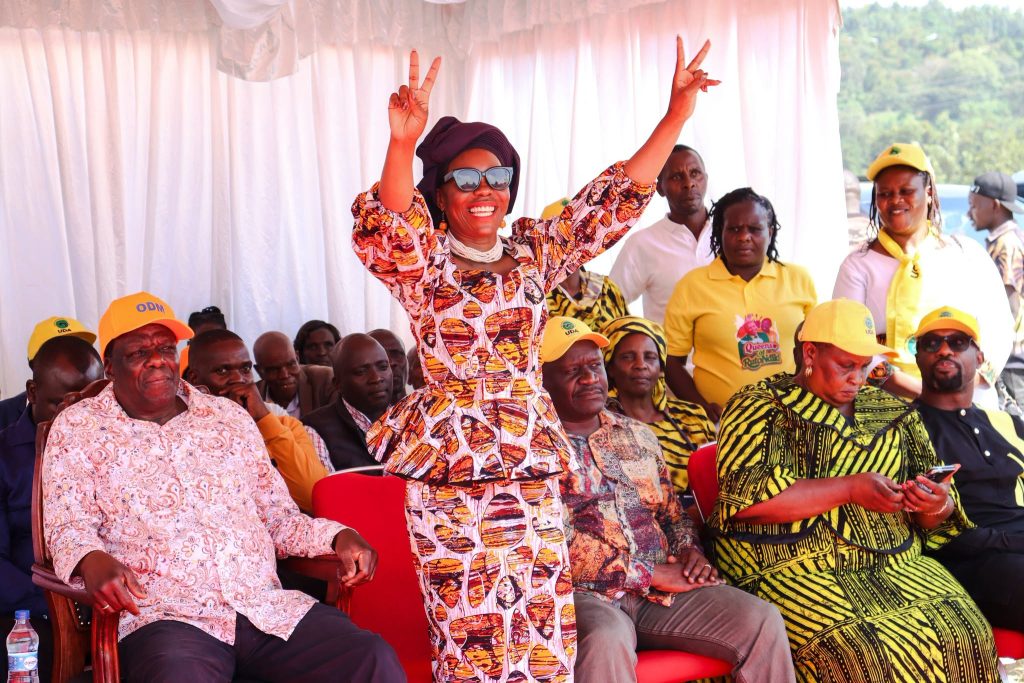
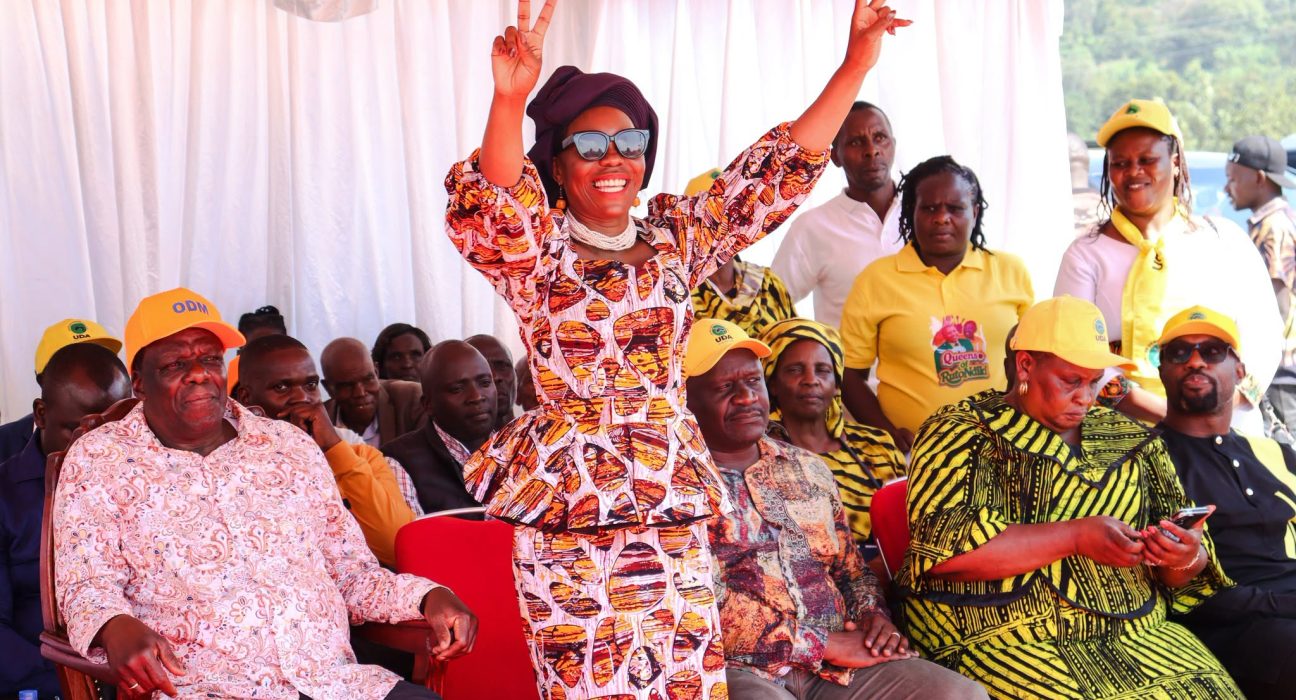
Omanyo, on the other hand, distinguished herself through her grassroots activities and humanitarian interventions, emerging as one of the most consistently ranked legislators across the survey’s different performance categories.
The survey places her third in ground visibility, first in public approval for humanitarian activities beyond the use of NGAAF funds and fourth in the utilisation of the affirmative action kitty. She also features fifth among women representatives with the highest number of bills, motions, petitions and questions.
Muge’s strongest showing comes from her parliamentary engagement, where she was ranked the best debater among the 47 women representatives.
The survey also places her third in the category assessing legislators with the highest number of bills, motions, petitions and parliamentary questions, highlighting her participation in legislative business.
Her parliamentary performance complements her overall first-place position and gives her an advantage in the survey’s assessment, which allocates equal weight to activities on the ground and parliamentary performance.
In the ground visibility category, Muge was ranked fifth nationally, placing her among the five women representatives recognised for their engagement with constituents.
Her presence in both the ground and parliamentary categories demonstrates a relatively balanced performance, although her strongest ratings were recorded in the legislative and debate categories.
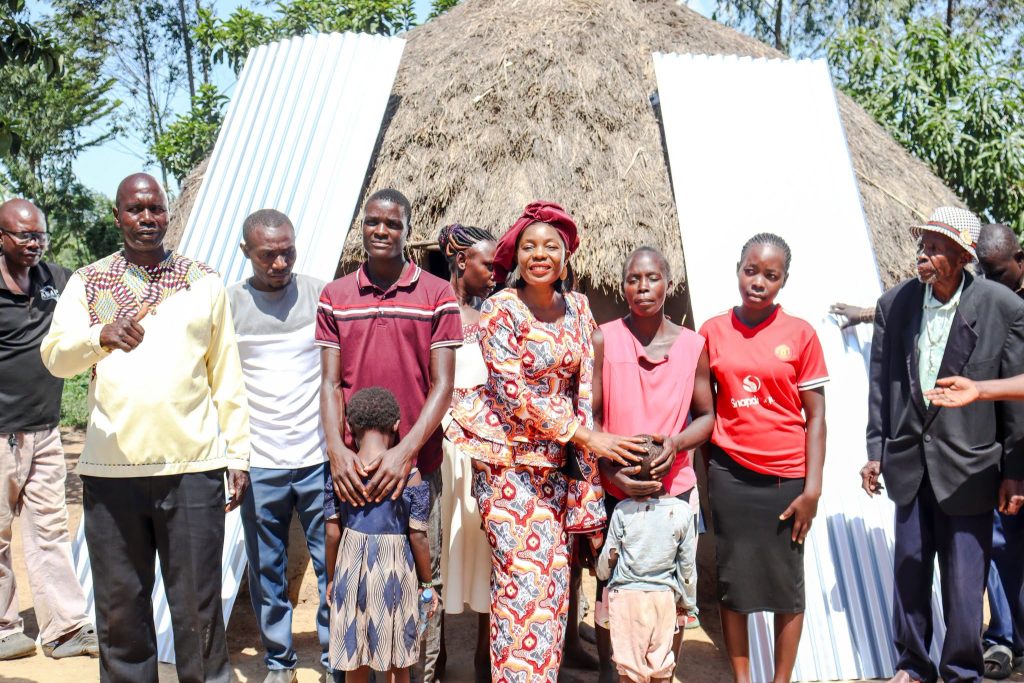
For Omanyo, the survey paints a picture of a legislator whose strongest ratings are anchored in grassroots engagement and humanitarian interventions.
She was ranked first nationally in public approval for humanitarian activities beyond the utilisation of NGAAF funds, an indication of the positive assessment she received for interventions that directly touch people’s lives.
The category examines public perceptions of humanitarian activities beyond the ordinary distribution and utilisation of the affirmative action kitty.
Omanyo also emerged third in the best ground visibility category, reinforcing her position among the women representatives who have maintained a visible presence among their constituents.
In the utilisation of NGAAF funds category, she secured fourth position, with the survey drawing on Office of the Auditor-General (OAG) reports in assessing the legislators’ performance.
Her parliamentary record also earned her fifth position in the category covering bills, motions, petitions and questions.
Although she did not feature among the five best debaters, her appearance in five of the survey’s six individual performance rankings makes her one of the most consistently rated legislators in the assessment.
The survey specifically identifies Omanyo as the only woman representative to feature in five of the six rankings, missing only the category recognising the best parliamentary debaters.
Timely Kenya adopted a 50-50 assessment model, dividing the overall performance score equally between activities on the ground and parliamentary performance.
The ground assessment accounted for 50 per cent of the final score and examined NGAAF utilisation and humanitarian activities.
The parliamentary component, also accounting for 50 per cent, assessed the number of bills sponsored, motions, petitions and statements, as well as participation in parliamentary committees.
The methodology was based on the understanding that women representatives have responsibilities in representation, legislation and oversight.
A total of 1,818 respondents drawn from across the 47 counties participated in the survey, which was conducted between October 18 and November 3, 2026, through Computer-Assisted Telephone Interviews (CATI).
Timely Kenya reported a margin of error of plus or minus 1.05 per cent.
The respondents comprised 70 per cent women and 30 per cent men. In terms of settlement, 65 per cent were drawn from rural areas, while 35 per cent came from county towns and cities.
The largest age group was 41 to 50 years, accounting for 35 per cent of respondents. Those aged 31 to 40 and 51 to 60 each accounted for 20 per cent, while respondents aged 18 to 30 represented 15 per cent. Those aged 61 to 75 accounted for 10 per cent.
Regarding education, 35 per cent had secondary-level education, 30 per cent had primary-level education, 20 per cent had tertiary education and 10 per cent had no formal education.
Kirinyaga Woman Representative Njeri Maina emerged third nationally with 55 per cent, followed by Kisii’s Dorice Donya, who scored 55.5 per cent, and Meru’s Elizabeth Kailemia with 55.3 per cent.
However, the published rankings contain an apparent inconsistency in the ordering of the third, fourth and fifth positions, since the scores shown do not correspond with their stated ranking order.
Murang’a Woman Representative Betty Maina occupied sixth position with 53.8 per cent, followed by Nairobi’s Muthoni Passaris with 51.6 per cent, Kericho’s Beatrice Kemei with 51.4 per cent, Homa Bay’s Bensuda Osogo with 51.1 per cent and Machakos’ Joyce Kamene, who completed the top 10 with 50.7 per cent.
In the ground visibility category, Kemei topped the list, followed by Betty Maina, Omanyo, Karambu Kailemia of Meru and Muge.
The humanitarian activities category was led by Omanyo, with Pamela Njoki of Embu second, Kemei third, Karambu Kailemia fourth and Passaris fifth.
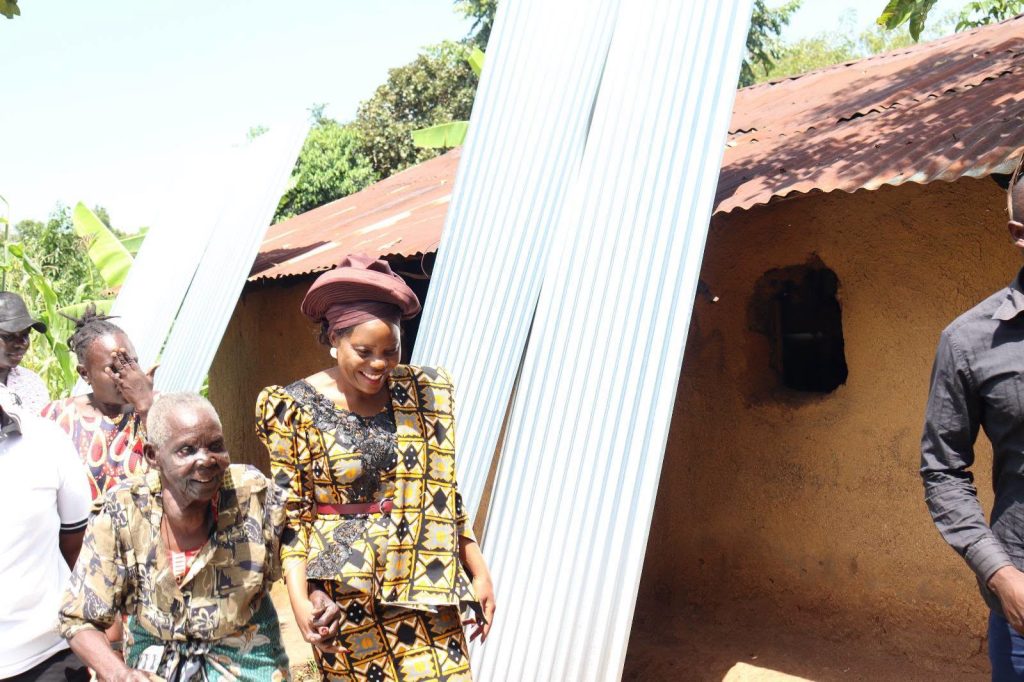
In the utilisation of NGAAF funds, Machakos Woman Representative Joyce Kamene emerged first, followed by Karambu Kailemia, Cecilia Asinyen of Turkana, Omanyo and Betty Maina.
In Parliament, Muge led the best debaters’ category, followed by Njeri Maina, Esther Passaris, Joyce Bensuda of Homa Bay and Zamzam Mohammed of Mombasa.
Njeri Maina topped the category covering bills, motions, petitions and parliamentary questions, with Kamene second, Muge third, Donya fourth and Omanyo fifth.
The survey also identified Tana River’s Amina Dika, Tharaka Nithi’s Susan Mwindu, Nyeri’s Rahab Mukami, Bomet’s Linet Toto and West Pokot’s Rael Aleutum among women representatives who rarely speak in Parliament.
Beyond the individual rankings, the survey presents a broader picture of the relationship between women representatives and their constituents.
It indicates that 61 per cent of women representatives seeking re-election may not secure another term, suggesting widespread dissatisfaction with the performance of some of the legislators.
It further reveals that, out of every 10 respondents, only four said they had seen their respective women representatives since the 2022 General Election.
Another finding indicates that 64 per cent of respondents do not understand the roles of women representatives, raising questions about public awareness of the constitutional and development responsibilities of the office.
The survey also observes that younger women representatives are performing better, while a majority of respondents who understand the role want the NGAAF kitty increased.
On parliamentary engagement, the report indicates that only 26 women representatives have been captured as having drafted bills, motions, petitions and questions during the four-year period.
Overall, the findings place Muge and Omanyo at the centre of the national performance assessment, with Muge taking the lead through her strong parliamentary record and Omanyo distinguishing herself through grassroots engagement, humanitarian interventions and consistency across multiple performance categories.