




Cassava in Western Kenya: From subsistence crop to science-driven economic asset
Across the homesteads of the Abaluyia sub-communities in Bungoma and Kakamega counties, cassava has for generations been a quiet pillar of survival – boiled, dried, or ground into flour to sustain families when maize harvests fall short.
Among the Banyala and Iteso in Bungoma and Busia, and the Maragoli and Tiriki in Vihiga, cassava is more than a crop. It is memory, resilience, and continuity.
Now, this traditional staple is undergoing a transformation driven not by speculation, but by science already taking root in farmers’ fields.
According to the Food and Agriculture Organization (FAO), cassava is the third most important source of carbohydrates in the tropics, feeding over 800 million people globally.
In Kenya, the crop has steadily gained prominence, with the Ministry of Agriculture estimating annual production at over 1.2 million metric tonnes, largely from western and coastal regions.
For years, cassava farmers across western Kenya and parts of the Nyanza region have battled devastating viral diseases.
The Cassava Mosaic Disease (CMD) and Cassava Brown Streak Disease (CBSD) are estimated to cause yield losses of up to 80–100 percent in severely affected farms, according to research by Kenya Agricultural and Livestock Research Organization (KALRO).
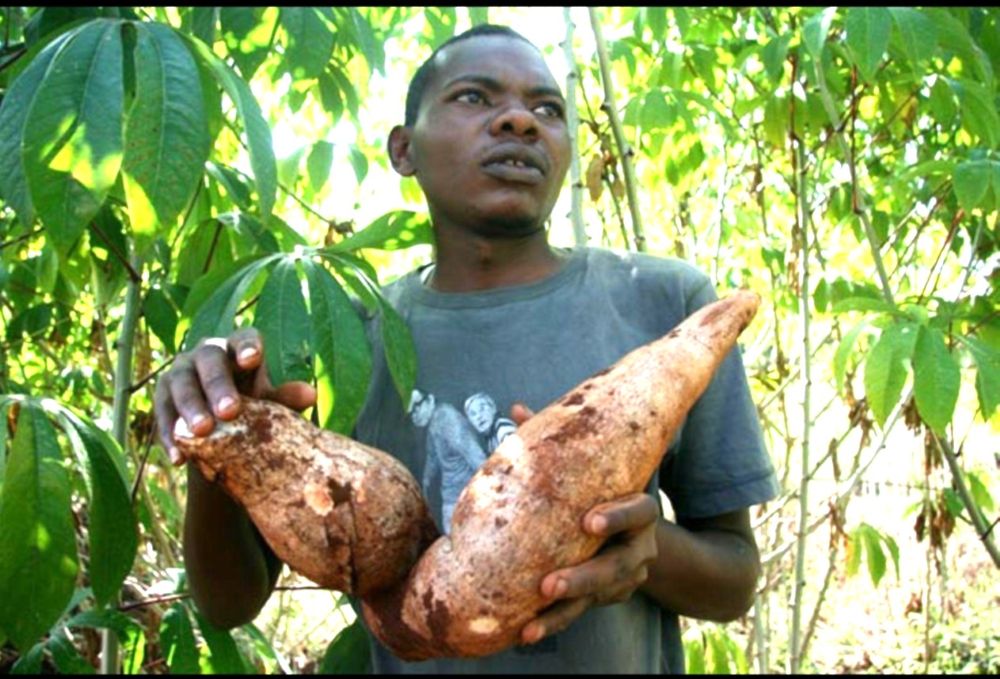
In many farms, what appears as a healthy crop often tells a different story at harvest as roots are discovered to be discoloured, rotten, and unfit for consumption or sale.
“It looks promising in the field, but when you harvest, you find nothing usable,” says a farmer from the Marama community in Kakamega, capturing a frustration shared across the region.
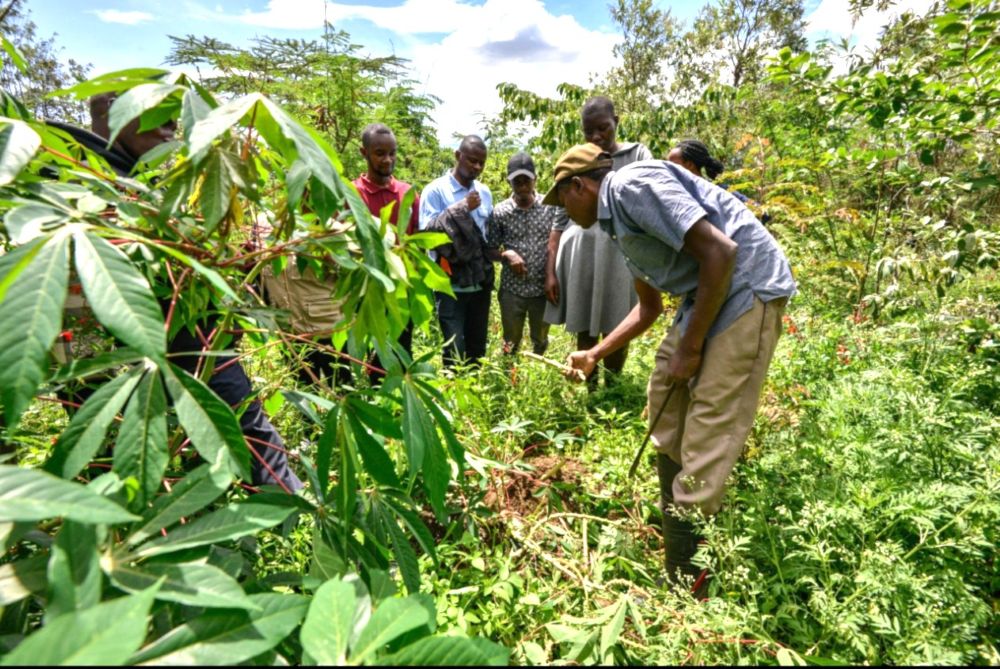
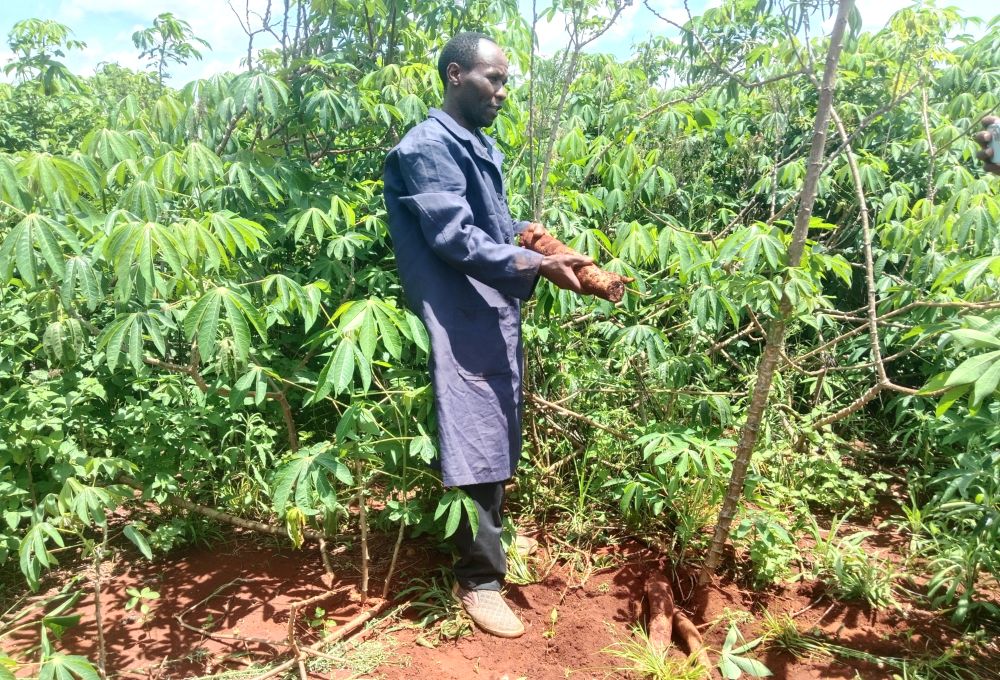
Through conventional breeding and ongoing agricultural research, scientists working with institutions such as Kenya Agricultural and Livestock Research Organization have developed improved cassava varieties that are resistant to these diseases.
These genetically modified varieties are bred for higher yields of up to 20–30 tonnes per hectare, compared to traditional varieties that often produce below 10 tonnes per hectare under smallholder conditions.
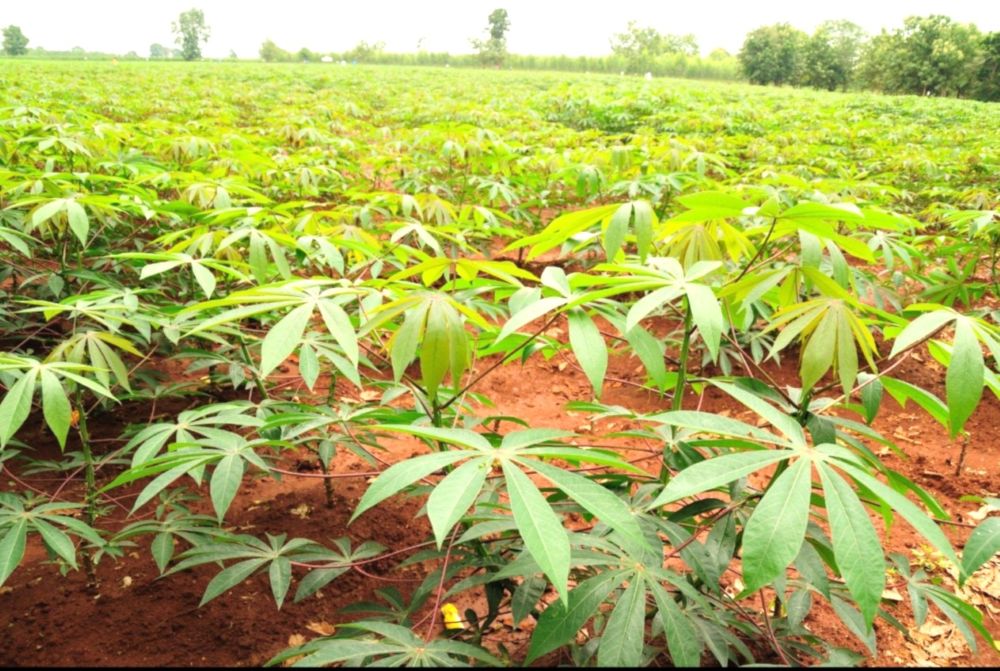
They also are resistant to the two devasting diseases that render farmers hopeless and helpless.
In Busia, Teso farmers are increasingly embracing them as a solution to years of uncertainty.
Beyond the farm, cassava is also powering new local economies.
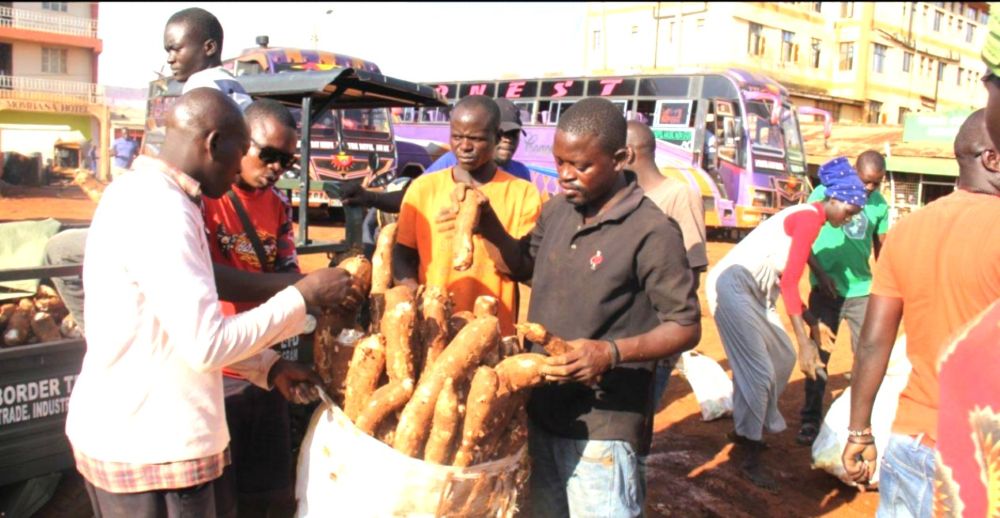
In Vihiga, women from the Maragoli and Tiriki communities are forming small processing groups, turning cassava into flour, chips, and animal feed. Similar enterprises are emerging among the Banyala in Busia and the Bukusu in Bungoma.
According to Kenya’s Ministry of Agriculture, demand for cassava products particularly flour is rising steadily, driven by efforts to substitute up to 10–20 percent of wheat flour in baking as the country seeks to reduce its wheat import bill.
“We used to grow cassava just for home consumption,” says a trader in Busia. “Now it is part of our business.”
Cassava’s strength has always been its ability to survive where other crops fail. FAO notes that cassava can tolerate poor soils and prolonged drought conditions, making it one of the most climate-resilient crops available to smallholder farmers.
Now, improved varieties are reinforcing that resilience offering better tolerance to climate stress while maintaining yields.
Among the Suba communities along Lake Victoria and inland Luo farmers in Nyanza, cassava is increasingly seen as a safeguard against food shortages in an era of changing weather patterns.
However, as science advances, it is important to draw a clear line between what is already in farmers’ hands and what remains in the research pipeline.
While improved cassava varieties developed through conventional breeding are currently being cultivated across these regions, genetically modified (GM) cassava is not yet under large scale commercial production in Kenya.
GM cassava varieties remain confined to controlled research trials, primarily within facilities run by Kenya Agricultural and Livestock Research Organization, as legal and regulatory processes including ongoing court cases continue to shape the country’s biotechnology landscape.
This distinction is critical, particularly in communities where questions around safety, access to certified planting materials, and trust in new technologies still influence adoption.
Experts note that sustained public engagement and farmer education will be essential in bridging the gap between scientific innovation and community acceptance.
Back in Bungoma, among the Bukusu, the shift is already taking root.
In Kakamega and Vihiga, among the Isukha, Idakho, Maragoli, and Tiriki, cassava is steadily shedding its image as a fallback crop and emerging as a reliable source of income.
Across Busia and into Nyanza, the narrative is consistent a traditional crop, strengthened through science, and reclaimed by communities.
What is unfolding is more than an agricultural transition. It is a convergence of culture and innovation where indigenous knowledge meets modern research to secure livelihoods.
Cassava is no longer just sustaining communities.
And across western Kenya, from the Abaluyia heartland to the shores of Lake Victoria, that transformation grounded in evidence, guided by science, and rooted in community is firmly taking hold for the future.