

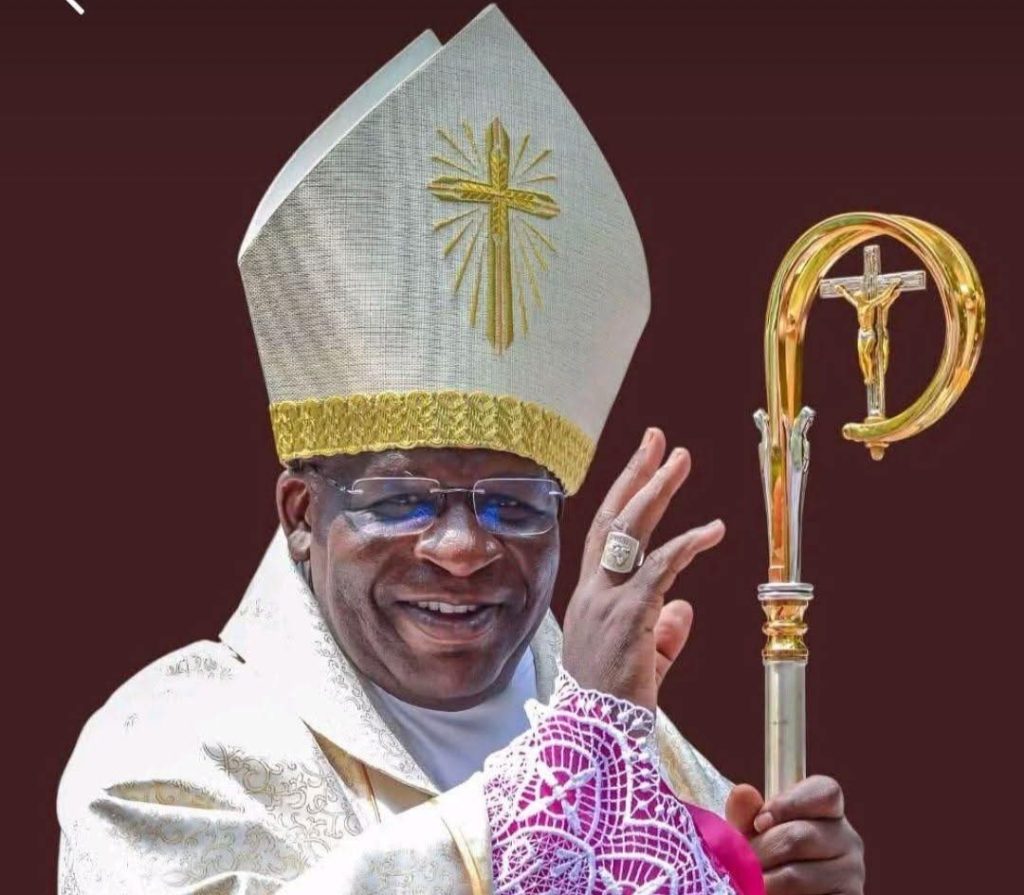


Exposed: Crisis rocks once solid Bungoma Catholic Diocese, Bishop Kadima fingered
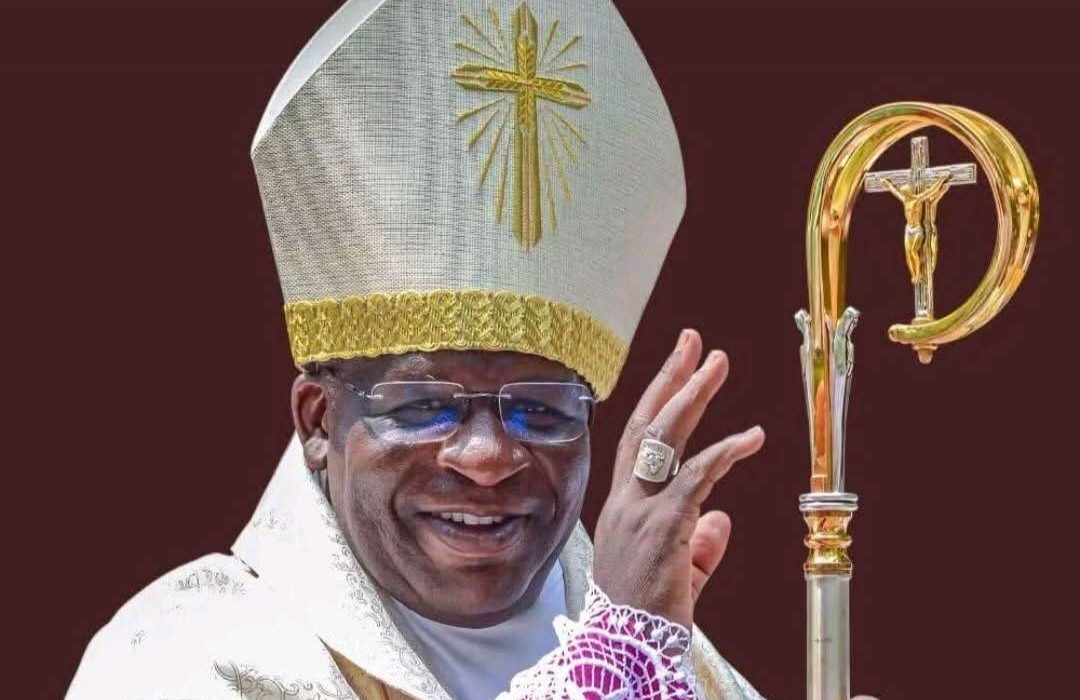
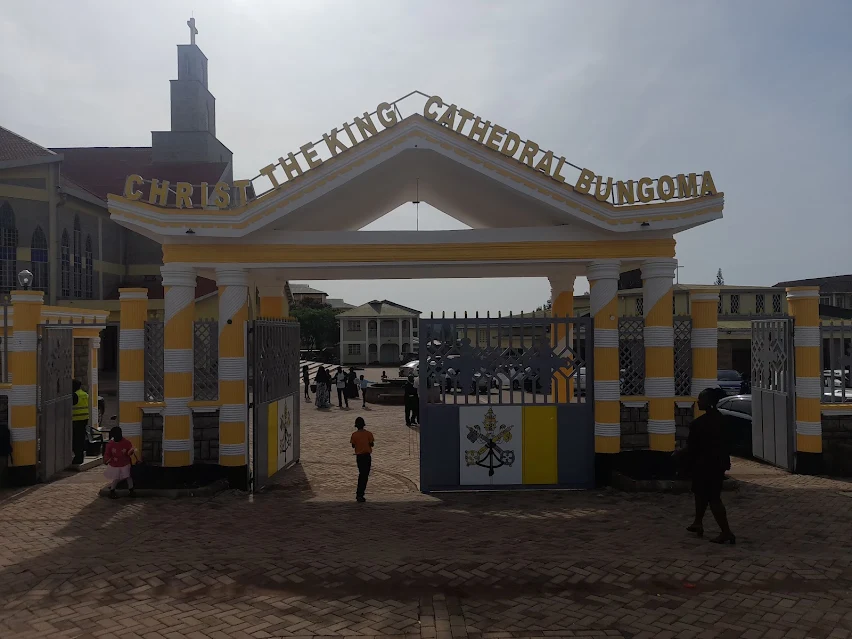
Questions have mounted over leadership, pastoral priorities and accountability as discontent allegedly spreads among sections of the clergy and the faithful in the Catholic Diocese of Bungoma.
A storm of discontent is reportedly gathering within the Catholic Diocese of Bungoma, where allegations of administrative overreach, questionable financial priorities, inconsistent pastoral planning and political partiality have raised uncomfortable questions about the direction of one of the region’s once vibrant Catholic institutions.
What should be a sanctuary of spiritual nourishment, moral guidance and Christian solidarity is, according to some disgruntled faithful, increasingly becoming an arena of bitter internal disagreements, with complaints that financial considerations and the concentration of authority are overshadowing the Church’s fundamental mission.
At the centre of the growing controversy is Bishop Mark Kadima, whose leadership has come under scrutiny from sections of the faithful and clergy who allege that the Diocese has experienced a troubling change of direction since the transfer of Bishop Norman King’oo Wambua to the Diocese of Machakos.
The allegations, which require independent verification and a response from the Bishop and the Diocesan administration, paint a deeply troubling picture of an institution whose internal management and pastoral priorities have become subjects of mounting concern.
For the complainants, the central question is no longer simply whether the Diocese is being administered efficiently. It is whether the Church’s spiritual mission is receiving the attention it deserves.
A Diocese accused of losing its spiritual compass
Some faithful contend that the Diocese has gradually lost the dynamism that previously characterised its activities, claiming that pastoral development, spiritual formation and meaningful engagement with Christians are increasingly being overshadowed by what they perceive as an excessive preoccupation with financial matters.
The allegations raise a fundamental question: what becomes of a religious institution when its members begin to believe that financial considerations are taking precedence over the spiritual welfare of the people it exists to serve?
The Catholic Church’s mission extends far beyond the collection of offerings, the administration of Church property and the financing of institutional programmes. It encompasses evangelisation, the formation of consciences, the protection of vulnerable people, the promotion of justice and the provision of pastoral care to communities facing profound social and economic difficulties.
Critics argue that these responsibilities must remain at the heart of Diocesan leadership, irrespective of the financial demands associated with running a large religious institution.
Some complainants allege that the Diocese is being managed on autopilot, with important questions about pastoral direction, institutional priorities and the welfare of priests and parishioners left unresolved. These criticisms, if substantiated, would demand a serious examination of the administration’s priorities and its mechanisms for receiving and addressing legitimate grievances.
The controversy is particularly sensitive because the Church commands considerable moral authority in society. Its leaders are expected not merely to preach accountability but to demonstrate it through transparent administration, responsible stewardship and an unquestionable commitment to the common good.
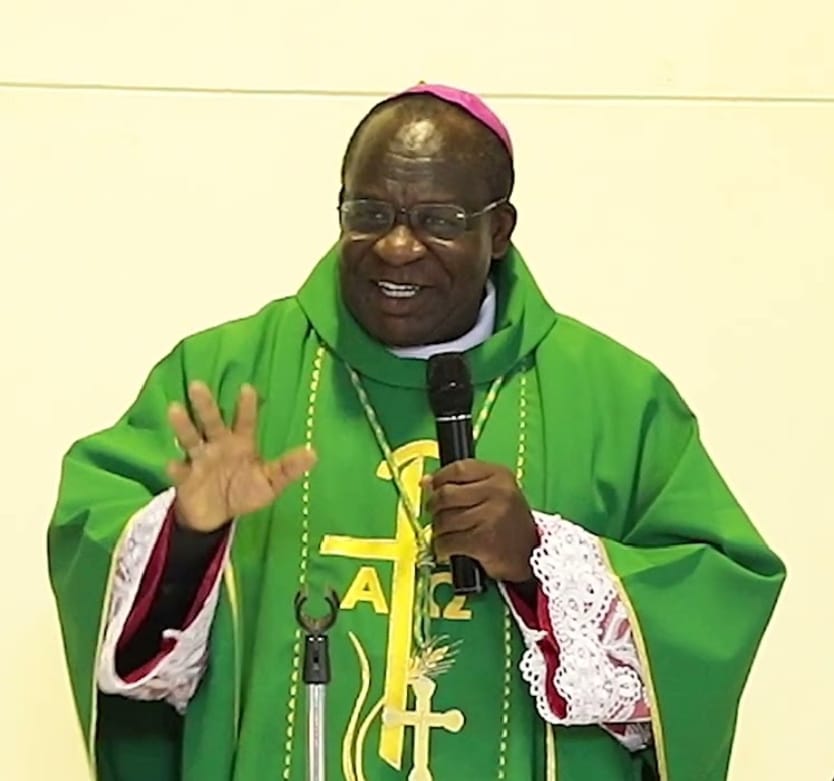
The Bishop is accused of concentrating too much on power
Another major source of discontent concerns the alleged concentration of administrative authority in the Bishop’s office.
According to complaints attributed to sections of the clergy, priests appointed to oversee various Diocesan departments are allegedly left with limited room to exercise independent judgement, with the Bishop accused of involving himself in matters that would ordinarily fall within the responsibilities of departmental heads.
Some critics claim that this arrangement has reduced certain departmental appointments to little more than ceremonial positions, leaving priests with titles and responsibilities on paper but insufficient authority to implement meaningful decisions.
The allegations have prompted concerns about the effectiveness of delegation, the value of professional advice and the ability of the Diocesan administration to benefit from the experience and expertise of its own personnel.
A Diocesan structure cannot function effectively if every significant decision is perceived to depend upon one individual. Large institutions require clear responsibilities, functioning departments, dependable communication and an administrative culture in which qualified personnel can contribute without fear of being disregarded.
An unnamed source described as being close to the Bishop alleges that he is reluctant to accept advice and frequently behaves as though he possesses the answers to virtually every question.
According to the source, even those regarded as his advisers struggle to influence his decisions, with the source characterising the relationship as one in which the Bishop advises those who are supposed to advise him.
If this description accurately reflects the administration’s internal culture, it would raise serious questions about whether dissenting views are given a fair hearing and whether decisions are subjected to sufficient scrutiny before implementation.
Nevertheless, the allegations require corroboration. A fair assessment must distinguish between legitimate episcopal authority, which is an established feature of Catholic governance and any alleged administrative practices that might unnecessarily marginalise competent personnel or discourage constructive criticism.
The issue is not whether a Bishop should exercise leadership. It is whether that leadership is strengthened by consultation, accountability and prudent delegation or weakened by an alleged unwillingness to listen.
No policy for creation of Parishes and transfer of Priests
Perhaps among the most contentious complaints are those concerning the establishment of new parishes and the transfer of priests.
Some Christians and members of the clergy allege that the Diocese lacks a sufficiently clear, consistently applied and publicly understood framework governing the creation of new parishes and the reassignment of priests.
They claim that decisions which can fundamentally alter the lives of priests and the financial responsibilities of entire Christian communities are sometimes communicated through informal or unexpected announcements, rather than through a transparent process supported by clearly articulated pastoral and administrative considerations. They are termed as roadside announcements.
The critics describe this alleged approach as arbitrary and argue that the establishment of a parish should never be treated as a simple administrative announcement.
A parish is not merely a geographical designation, a church building or a new entry in Diocesan records. It is a community requiring sustained pastoral leadership, financial planning, infrastructure, catechetical programmes, safeguarding arrangements and a realistic assessment of its capacity to support the ministry entrusted to it.
Before establishing a new parish, a responsible administration must consider the number of faithful, the distance from neighbouring parishes, the availability of priests, the state of existing facilities, the community’s economic circumstances and the long term cost of maintaining pastoral services.
Without adequate planning, what begins as an admirable attempt to bring the Church closer to the people can become an exhausting financial burden.
The complaints suggest that some newly established communities struggle to meet the costs associated with supporting their priests and maintaining essential parish operations.
For ordinary Christians already contending with unemployment, rising living costs, school fees, medical expenses and other household obligations, additional and poorly anticipated Church responsibilities can become particularly difficult to sustain.
The burden, critics argue, is ultimately transferred to parishioners who may be expected to provide financial support without having been adequately prepared for the scale of the commitment.
The consequences could extend beyond strained parish finances. Where a community cannot consistently provide for essential pastoral and living expenses, the sustainability of the new parish may be compromised, while the priest assigned to serve it may find himself under considerable economic pressure.
Some critics further allege that priests serving in financially struggling parishes have been forced to seek assistance to meet basic needs with some of them turning into beggars.
The difficult question is this, can the creation of additional parishes genuinely be considered pastoral progress if the communities expected to sustain them are left struggling to meet their obligations?
The number of parishes established should never be the sole measure of success. Their ability to provide consistent spiritual care, support their clergy and serve their communities over the long term is equally important.
The controversy surrounding priestly transfers presents another test of administrative fairness.
Transfers are a normal feature of Catholic life and may be necessary for pastoral reasons, institutional needs, personal circumstances or the development of a priest’s ministry. However, their legitimacy does not remove the importance of sound procedures, appropriate communication and sensitivity to the communities affected.
Some complainants allege that transfers under the current administration are insufficiently predictable and that the reasoning behind particular decisions is not always adequately explained to those concerned.
Where transfers are perceived as sudden, inconsistent or punitive, they can generate suspicion, undermine morale and weaken confidence in the administration.
A priest may spend years building relationships with a community, developing its pastoral programmes and understanding its social challenges. An abrupt change can disrupt that work, particularly where the incoming priest must begin without adequate preparation or institutional support.
The issue becomes even more sensitive when a transfer follows a complaint against a member of the clergy. In such circumstances, the administration must be able to demonstrate that personnel decisions are based on legitimate pastoral or disciplinary considerations rather than an alleged desire to silence criticism.
These concerns call for clear procedures, confidential channels for raising grievances and appropriate safeguards against retaliation.
The faithful deserve to understand how the Diocese makes decisions affecting their pastoral life, while priests deserve fair treatment and the opportunity to have legitimate concerns considered through appropriate ecclesiastical channels.
Priestly discipline allegations that demand serious scrutiny
Among the most serious allegations directed at the Diocesan leadership are claims concerning the handling of complaints about priests accused of conduct inconsistent with their obligations of celibacy.
Some complainants allege that, rather than addressing such matters through appropriate canonical procedures, the administration has in certain cases responded by transferring the priests concerned or taking action against those who raised complaints.
Nevertheless, their seriousness makes it essential that they be examined through fair, confidential and properly documented processes.
Priestly celibacy is a significant commitment within the Latin Catholic tradition. Allegations that a priest has violated his obligations must be assessed carefully, with due regard for the relevant facts, the applicable canonical requirements and the rights of everyone involved.
A transfer, by itself, does not establish guilt, nor does it prove that a complaint has been suppressed. Equally, transferring a priest cannot substitute for a proper investigation where the circumstances require one.
The decisive issue is whether complaints are received, assessed and addressed consistently, without favouritism, intimidation or prejudgement.
Where allegations concern possible abuse, coercion, exploitation, safeguarding violations or harm to vulnerable people, the need for appropriate protective measures and reporting through applicable civil and ecclesiastical channels becomes even more urgent.
A credible disciplinary system protects complainants, safeguards vulnerable people, respects the rights of the accused and upholds the integrity of the Church.
Some individuals reportedly dissatisfied with the handling of complaints have expressed a determination to pursue further action, with some characterising the Bishop as complicit in the alleged failures.
Such characterisations are serious allegations, not established conclusions. Any attempt to establish responsibility must be based on verifiable evidence concerning what was reported, when it was reported, how the administration responded and whether the applicable procedures were followed.
Politics and the Church
The allegations of political partiality introduce another potentially damaging dimension to the controversy.
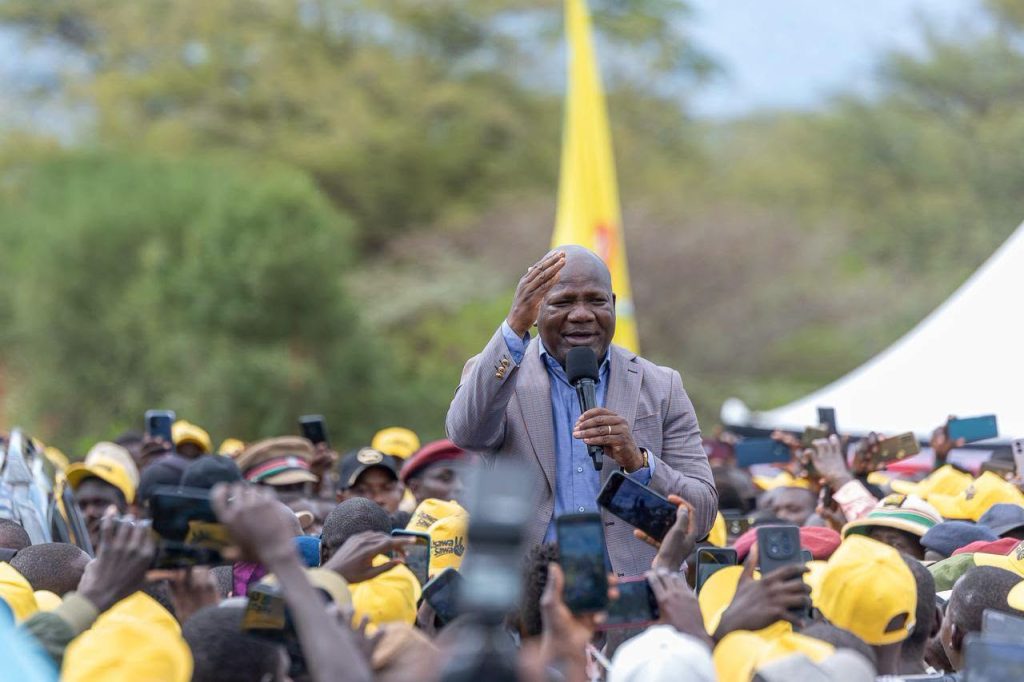
Some members of the clergy reportedly claim that they have been encouraged to adopt political positions favouring particular candidates. The allegations have prompted suspicions among critics that personal or financial considerations may be influencing the administration’s political posture.
The Catholic Church has a longstanding role in public life, including speaking on corruption, human dignity, social justice, responsible leadership and the welfare of citizens. Its moral responsibilities do not require silence in the face of injustice or the abuse of public office.
However, there is a substantial difference between educating Christians about their civic responsibilities and allegedly directing clergy towards particular candidates for undisclosed personal or institutional interests.
When religious authority is perceived to be serving partisan objectives, the credibility of pastoral guidance can be weakened. Parishioners may begin to question whether political messages are motivated by sincere moral concerns or by interests unrelated to the common good.
Taken together, the allegations raise a broader question about the mechanisms available to priests and laypeople who believe that the Diocesan administration has failed to address their concerns.
A functioning institution needs more than a leader and a hierarchy of offices. It also needs credible procedures through which grievances can be submitted, examined and resolved.
Where individuals believe that complaints will be ignored, that advice will be dismissed or that speaking out may expose them to retaliation, institutional silence can become self perpetuating.
The result is not necessarily the disappearance of disagreement. Instead, frustration may deepen, informal accusations may multiply and confidence in established channels may deteriorate.
That is why the existence of clear complaint procedures, transparent financial oversight, fair personnel practices and responsible communication is so important.
For critics who believe that local attempts to resolve the concerns have been ineffective, attention may turn to the appropriate ecclesiastical authorities beyond the Diocese.
Within the Catholic Church, a Diocesan Bishop exercises authority in accordance with canon law and the Church’s wider structures of governance. That authority exists alongside obligations concerning the administration of ecclesiastical goods, the welfare of clergy, the protection of the faithful and the observance of applicable canonical procedures.
The Holy See has established channels through which serious concerns may be brought to the attention of competent authorities. However, any intervention must follow the appropriate processes and the existence of allegations does not automatically establish that extraordinary action is warranted.
The departure of the previous Apostolic Nuncio from Kenya has been cited by some observers as a complicating factor. Nevertheless, the precise status of the diplomatic appointment and the availability of other reporting channels should be confirmed rather than assumed. The absence of a particular office holder, if established, would not by itself demonstrate that all avenues of ecclesiastical oversight had become unavailable.
The crucial question is whether the concerns can reach the appropriate authorities and receive a fair, timely and impartial assessment.
For many Christians, the Church is not simply an institution. It is a source of identity, community, moral guidance and hope during periods of hardship.
Parishioners contribute their time, labour and money because they believe in a mission that transcends individual office-holders. They volunteer, support charitable initiatives, maintain church buildings, educate children in the faith and assist vulnerable members of their communities.
When serious questions arise about leadership, financial stewardship or the treatment of complaints, the consequences can reach far beyond the offices in which decisions are made.
The allegations surrounding the Catholic Diocese of Bungoma present an opportunity for a serious and evidence based examination of leadership, administrative practice and pastoral priorities.
If some concerns are substantiated, acknowledging them and implementing appropriate reforms could help prevent further deterioration in relations between the administration, the clergy and the faithful.
Above all, those entrusted with leadership must be prepared to explain their decisions, listen to legitimate concerns and distinguish criticism of administrative conduct from hostility towards the Church itself.
The faithful are entitled treatment and appropriate pastoral support. Complainants deserve a credible process. Those accused of wrongdoing deserve a fair hearing.
The most consequential question facing Bungoma is therefore not simply whether Bishop Kadima’s critics are right or wrong. It is whether the Diocese has sufficiently credible mechanisms to establish the truth, correct any failures and restore confidence where it has been lost.
For a Church whose moral authority rests heavily upon the trust of its faithful, that distinction is indispensable.