


Confidence grows in IG Sacco as profits and membership climb
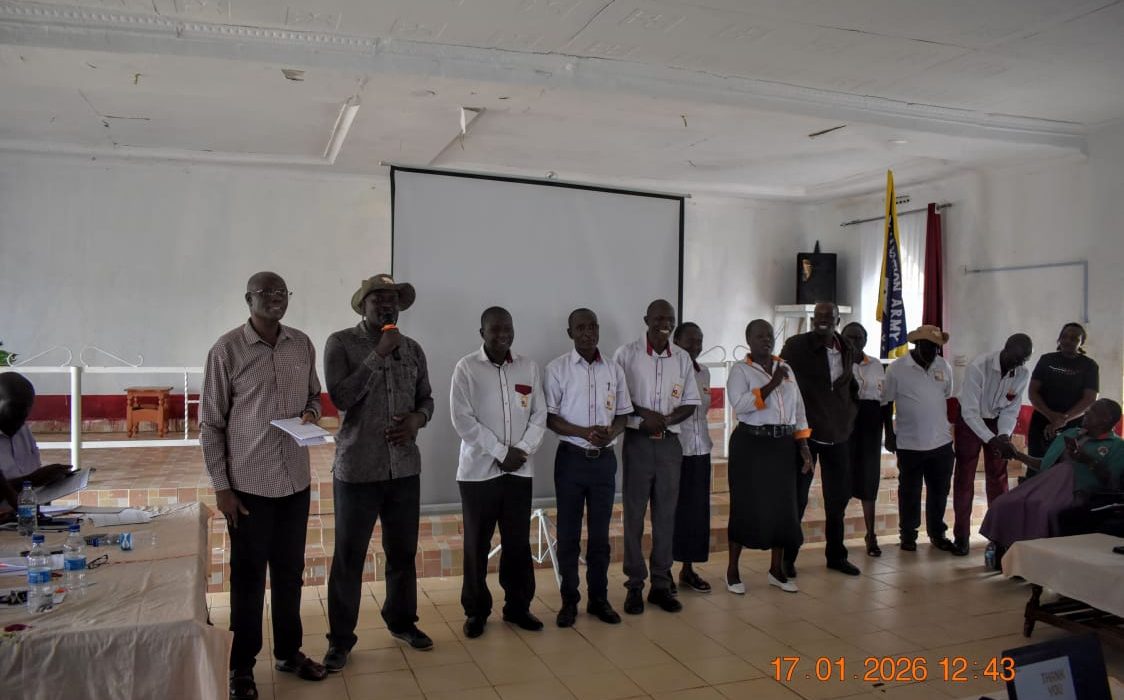
As Invest and Grow (IG) Sacco enters its 2026 education programme, it has remained steadfast in its performance, celebrating an asset base of KSh 16 billion, which was recorded by the end of last year.
The Sacco’s Chairman, Kennedy Keya, in a speech read to members during the 2026 Education, Training and Information Programme, stated that members will be able to enjoy even more benefits once the Cooperative Societies Act and the Sacco by-laws 2024 are enacted.
Join our WhatsApp Channel here for more news updates.
Keya said the ongoing amendments to the two have been underway since 2005 and are likely to be completed next year (2027), after which the amendments will be finalised to enable members to comply with and align to the new system of conducting business.
“The Sacco sincerely appreciates your continued business support and patronage, which has enabled us to realise steady performance, and we are aligning our by-laws to serve you even better.”
To ensure that the Sacco remains relevant and stable, in line with its strategic plan, it intends to digitise all lending platforms, both BOSA and FOSA, in the near future. This will conform to the already existing four digital loan products: E-FOSA, E-loan, E-salary and pension advance, and E-dividend advance.
The chairman confirmed that plans to digitise one short-term loan each in BOSA and FOSA were underway, following the streamlining of e-guarantorship and the credit scoring matrix.
According to the Sacco’s performance as at 31st December 2025, asset growth rose to KSh 16.306 billion, an 11.2 per cent increase from the previous year, while income ascended to KSh 2.281 billion in 2025 from KSh 1.999 billion in 2024, representing a rise of 14 per cent (KSh 0.282 billion).
The loan portfolio also recorded an increase to KSh 14.602 billion from KSh 12.628 billion in 2024, marking a growth of 15.6 per cent (KSh 1.974 billion).
The Sacco has continued to record other key performance gains, including non-withdrawable deposits hitting KSh 8.221 billion in 2025 compared to KSh 7.394 billion in 2024, reflecting a variance of KSh 0.828 billion (11.1 per cent). New members increased from 1,325 to 2,219, while salary earners improved to 18,971 members from 15,931 in 2024.
With 28,917 members, IG Sacco prides itself on having over 18,000 FOSA salary earners and is looking forward to recruiting more, as it has a wide range of products aligned to FOSA, including E-loan, E-FOSA and empowerment loans, which can be accessed by salary earners.
The chairman said the Sacco’s assets have continued to grow through continuous and committed contributions to share capital and monthly subscriptions to non-withdrawable deposits, as guided by the Sacco’s strategic plan.
“The Sacco attributes its membership growth to aggressive marketing conducted in schools in Tiriki, Mumias, Butere, Lurambi, Ikolomani, Kabras, Vihiga and Emuhaya areas, where newly employed teachers, including junior secondary teachers, were recruited to join the Sacco,” said Keya.
The report also stated that by recruiting more members, the Sacco is moving towards achieving its strategic pillar of membership growth of 10 per cent per annum.
On savings, IG Sacco has managed to bring on board 29,399 savers, with 27,199 Akiba savings subscribers, 1,467 Nyota Ndogo savers and 733 holiday savers.
With more members embracing these savings product options, they will be able to access and enjoy more benefits, including annual interest, alongside the Akiba loan product.
On credit performance and digital lending, there was a notable credit disbursement of KSh 12.438 billion, an increase of 20 per cent compared to 2024.
Also recorded was growth in investment-based loans by 12 per cent compared to last year due to revised products, while income-based loans increased by 28 per cent as members shifted towards income-based products, including digital loans such as E-loan and E-FOSA loans with guarantors. As a result, credit disbursement rose by 20 per cent due to affordable, member-centric products and services.
“We appreciate all members who patronised our Sacco products and services to realise the above performance. As facilitated during business and entrepreneurship engagements, we urge members to continue utilising Sacco credit facilities to finance their investment projects, which will offer alternative sources of income,” he noted.
To keep the Sacco relevant, its elections and by-elections are set to be conducted next month on 14th February 2026. Tiriki, Mumias, Butere and Lurambi electoral areas will vote for directorship positions, while in Kakamega County A (Mumias, Butere and Ikolomani electoral areas), members will be electing a supervisory committee member.
In appreciation of service offered to the Sacco, Chief Executive Officer Peter Vuhyah appreciated the outgoing chairman, Kennedy Keya, for his selfless and tremendous service and stewardship that has seen the Sacco grow to greater heights.
“As we wish our chairman a happy exit, we also call upon the incoming team to strongly build our cooperative foundation and steer IG Sacco to the next level, as stipulated in our 2023–2027 strategic plan,” stated Vuhyah.
Do you have a story to tell? Do you have a news tip? Do you want to advertise with us? Contact us via news@mulembe.co.ke