

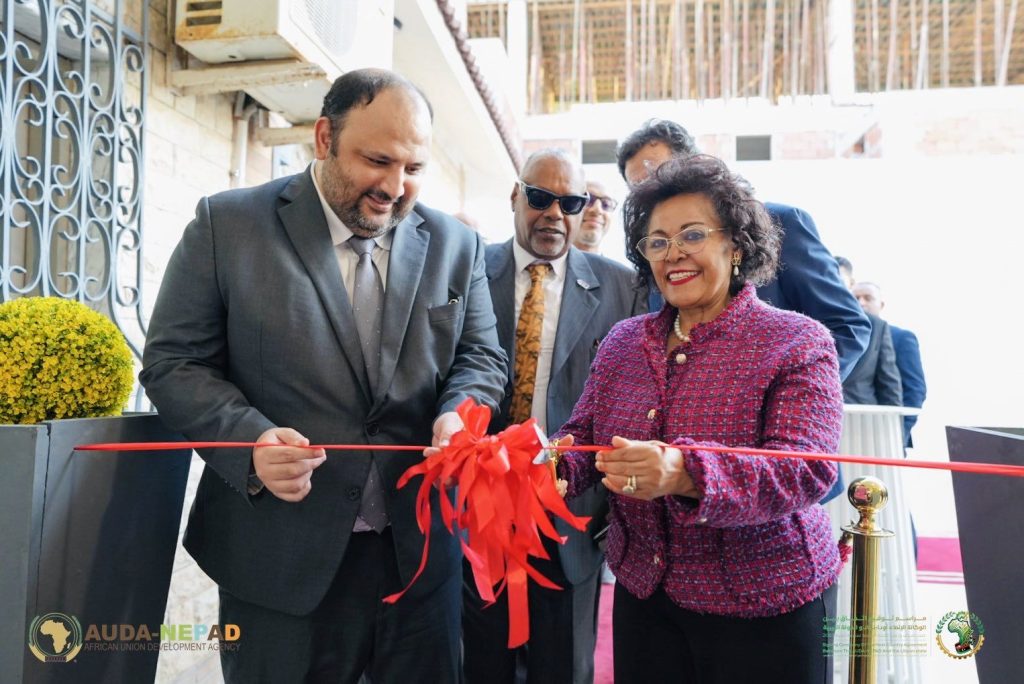



Agenda 2063 on Course as AUDA-NEPAD Opens Office in Tripoli Libya.
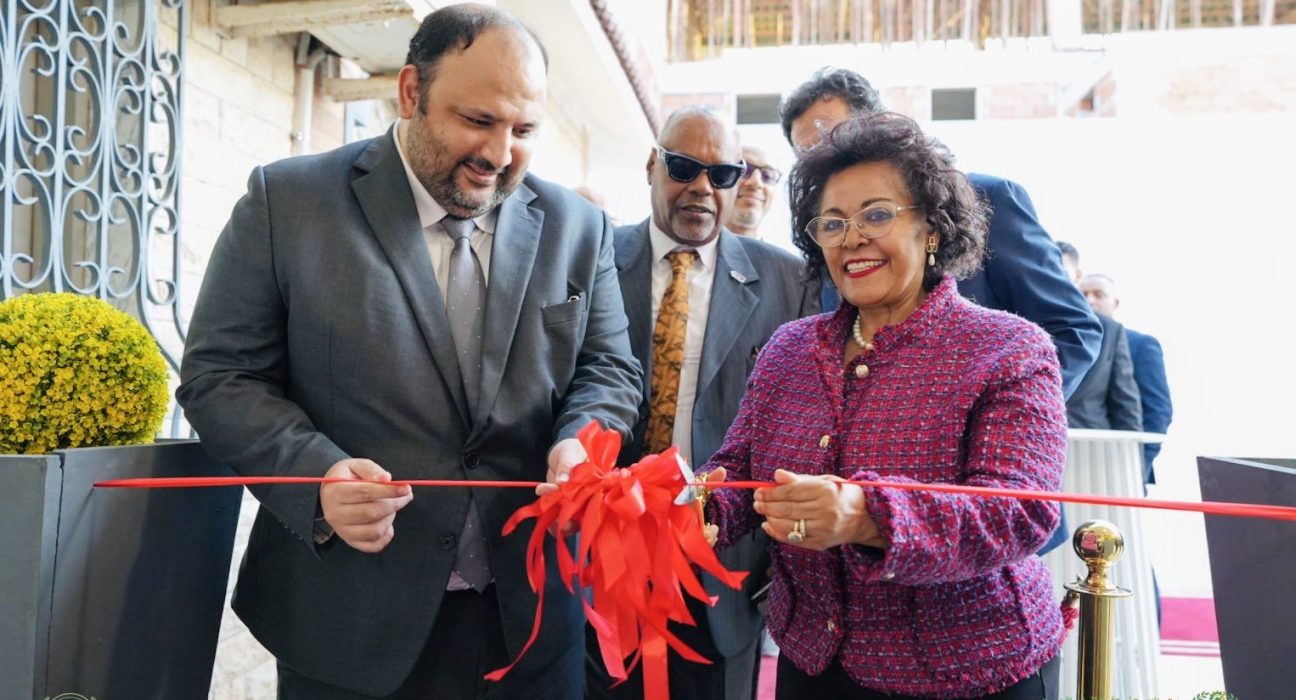
As Tripoli being picked as the host city to host the 2027 first continental conference on national planning Authorities, the African Union Development Agency in partnership with the new partnership for African development (AUDA -NEPAD)have opened their country office to accelerate the course.
The new office in Tripoli is key as it will be on the forefront on project preparation, investment mobilisation and planning capacity ahead of the scheduled continental conference early next year.
During the grand opening of the office which was witnessed by the Prime minister of the Government of national unity Hamid Mohammed Dbeibah, AUDA-NEPAD chief executive officer, Nardos Bekele-Thomas who signed a cooperation agreement with Fathallah Abdel Latif Al-Zani, the minister of State for African affairs where the signed agreement provides a formal framework for the partnership.
The new country office will work with national institutions across Libya to early identify development priorities, prepare projects, mobilise partnerships and address any hurdles towards their implementation.
The office will also strengthen country’s planning, monitoring and reporting capacity.
Its schedule will follow the African Union’s commitment to a Libyan-led and owned path to lasting peace and stability.
“An AUDA-NEPAD office in Tripoli is an important addition to strengthening cooperation and the exchange of expertise and knowledge, and to accelerating the implementation of development programmes and projects” said Fathallah Abdel Latif Al-Zani.
The minister of state for African affairs further added that it will also provide a practical framework for coordinating efforts between national institutions and the African development agency, where it will assist to transform visions and plans into tangible projects and programmes that will benefit Libya and the African continent at large.
“We are hopeful that this office will be an avenue for mutual cooperation and coordination, open wider horizons for development and investment partnerships, and will contribute to achieving the goals of the African Union’s Agenda 2063 besides advancing continental integration and sustainable development”, he added.
AUDA NEPAD C.E.O Nardos Bekele Thomas insisted that the agenda 2063 cannot be implemented from the African Union alone saying it must be owned, implemented and sustained within its member states, where hardest obstacles and greatest opportunities lie,”
“Too many vibrant projects across Africa get stuck at the preparation stage, long before investors are ready to commit. A pipeline remains in the list of intentions until projects are prepared, financed and built”, she revealed.
The opening of the Tripoli office comes after a two year collaboration period between AUDA-NEPAD and Libya that saw the Prime minister’s office establish Permanent committee for monitoring and implementing Agenda 2063, chaired by Dr. Mohamed Al-Fadil Jibran.
She stated that in 2025, Libya completed its first biennial national implementation report under the second ten-year implementation plan where with AUDA-NEPAD support, Libya also hosted two rounds of capacity building sessions on Agenda 2063 monitoring and reporting in November 2025, and August 2026, with officials from other African countries allowed to attend.
Ms. Bekele-Thomas also announced that AUDA-NEPAD and Libya are jointly preparing the first Continental conference of National planning authorities where planning authorities are where Agenda 2063 becomes budgets, programmes and projects.
“The aim is for the conference to become a standing platform for peer learning among planning authorities, with Libya as convener. AUDA-NEPAD foresight modelling shows that accelerated implementation of Agenda 2063 can be achieved in Libya by 2033,”she assured.
With the 2033 projections in place it has been noted that economic growth could reach 5 to 6 per cent, compared with around 2.4 per cent if hydrocarbon dependence continues as fixed broadband subscriptions could rise from 7.7 to 24.7 per 100 people.
Secondary enrolment could rise from 66 to nearly 80 per cent as maternal mortality could fall from 74.4 to 56.4 per 100,000 live births.
Dependence on agricultural imports could fall from 68.3 to 54.4 per cent.
Libya borders six African countries and links North Africa to the Sahel. Several regional infrastructure projects strengthen this position:
Two transit corridors project would connect Misrata to Agadez in Niger, and Benghazi through Kufra towards Sudan.
Libyan alternative freeway would serve roughly 2 million people and carry an estimated 30 to 40 per cent of national freight.
Egypt–Libya regional electrical interconnection would enable power exchanges of up to 1,000 megawatts.
Libya–Tunisia section of the ELTAM interconnector is designed to add a further 1,000 megawatts to a wider North African power corridor.
Three of these projects are already in the continental Programme for infrastructure development in Africa (PIDA) pipeline, which AUDA-NEPAD coordinates.
“Helping move them toward financing will be among the first tests of this office,” said Ms. Bekele-Thomas. “Libya has shown the will. AUDA-NEPAD brings the tools, and the commitment to stay the course with you.