

Forgotten, forsaken, fighting on: The pain and plight of Northern Kenya
Heavy gunfire tore through the darkness. Terrified screams rent the air as men, old and young fell to a hail of bullets. For hours the rapid gunfire paralysed the atmosphere before an eerie stillness slipped in.
After running out of bullets, the soldiers pulled out machetes. They rose and fell steadily as the sharp metallic edges sliced through human flesh and shattered bones.
The nightmare started unfolding on the evening of Monday, February 10 1984.
Thousands of men and boys were rounded up throughout the night. Many were picked up from their offices while others were taken from their homes. Armed soldiers from the Kenya Defence Forces (KDF) assembled men from the Degodia, one of the largest Somali clans in Wajir district.
Like cattle being taken to the slaughterhouse, they were ferried to the isolated Wajir airstrip where soldiers began stripping them naked before forcing them to lie on the ground facing down with hands tied behind their backs.
On Tuesday, February 11 1984, a fierce sun burnt those who lay on the tarmac, battered. Those who tried to turn and face up were beaten, their knees broken and skulls smashed. Others were bayoneted. They started dying from dehydration or torture. The weak and frail elderly went first.
LUNCH FOR HYENAS
The torture and killings went on for five days. The soldiers would drive the dead and injured for miles to dump them into the bush. In the bloodiest of ink, the writing of the Wagalla Massacre had just begun. The historical and survivors accounts are chilling.
In a televised documentary, a survivor says that when panicky women began looking for their husbands and sons, soldiers told them: “Today, we are your husbands. We will take you and show you where they are.” They proceeded to brutally rape the women and break their legs”
Film maker Judie Kibinga says that; people were shot, bayoneted, clobbered, and starved: “Men were rounded up…. numbers go to over 5000. Once the massacre happened, you had vehicles carrying the dead and the injured and scattering them for over 50 kilometers away to be eaten by hyenas. Women miscarried on the sand” says Judie.
Abdi Ishmael, a former Civil Servant says that his wife woke him up saying: “We are being surrounded by soldiers.” I looked through the window and saw soldiers all over. I opened the door. One soldier asked ‘Are you Degodia” I said: ‘No am not Degodia. I’m a government officer living in government quarters. I’m serving all tribes that live in this region.” Then he told me: “No. We were told to come to your house then collect you because you are Degodia.” So, I agreed and went with them. At around 7am we were taken to Wagalla airfield. I found more Degodia clansmen. We were kept there for a whole day without food or water. The next day we were stripped naked and starved. We were beaten. People were killed with stones, knives, bullets, and simis. They would put petrol on pieces of clothes then place it on your body and watch you burn,” he spoke tearfully.
The Wagalla massacre of ethnic Degodia Somalis by the Kenyan Army was triggered by a government order.

In his oral submissions to the Truth, Justice and Reconciliation Commission (TJRC), on Tuesday, June 14 2011, former Provincial Commissioner (PC), North Eastern Province Benson Kaaria says that: “…it was necessary in order to recover illegally acquired firearms owned by the Degodia clan, or tribesmen, following a government order to have all illegal firearms surrendered. The Ajuran clansmen surrendered all the firearms but the Degodia were adamant and they continued to attack the defenseless Ajuran. All the arrested persons were transported by the Kenya Army vehicles to the Wagalla Airstrip for questioning and interrogation. That is where the shooting took place and this ended in a number of the arrested persons being killed.”
The Wagalla massacre exemplifies decades of suffering communities in North Eastern and the 23 Arid and Semi-Arid Land (ASAL); counties have endured since colonial times.
NO AMENITIES
Districts under the Northern Frontier District (NFD) faced harsh colonial governance and isolation. They were abandoned and lacked basic amenities like schools, hospitals, and roads. Residents tasted ‘freedom and development’ with the dawn of devolution.
Former Ambassador and Mandera Senator Engineer Mohamed Mahamud, captures some of his early education challenges in his forthcoming memoir; An Arduous Journey. He says: “We were all, boys of different sizes and varied ages squeezed insidethe tiny Duksi, small informal religious school. What used to be a former hides and skin store, had been turned into an education centre. In the 1960s, Duksis, (plural), were sprinkled across Kenya’s North Eastern Province. They played a central role in educating Somali children, especially in the deep, forgotten and neglected communities”
The Duksis were often small, community-run institutions operating without formal recognition from the government. They were typically held in open spaces, local mosques, or temporary structures. Teaching was done by sheikhs or maalims, (religious instructors), who had basic or advanced Islamic training. Duksis provided the only access to education in the absence of formal schools.
FIRST PRIMARY SCHOOL
During the 1960s and even 70s and 80s, formal education facilities provided by the Kenyan government were extremely limited in the NEP. As Kenya began to expand its educational programmes in the 70s, through to the 90s, Duksis began to incorporate elements of secular education. Today, Duksis coexist with formal schools.
While Maseno, Mangu, and Alliance High Schools were established by the Christian missionaries during the colonial era in the 1920s, Mandera received its first primary school in 1962.
Health Cabinet Secretary Aden Duale recalls his school fees challenges in his book, For the Record. He asked his father to sell one camel and pay his school fees. His father’s response was swift. “Why should I sell a camel to take you to school? Why don’t you come help herd the camels? What is school anyway?” he asked, his pastoralism speaking through him, blinding him to the value of the education I was pursuing.”
SECESSION
Marginalization made some Somali’s in North Eastern to start discussing identity and self-rule. They were fed up of being treated like children of a lesser god. In July 1962, the Colonial Secretary Reginald Maudling, established the Regional Boundaries Commission to redesign the old provinces and create six new regions.
Kenya was rapidly moving towards independence. The Somali had declared that they wouldn’t be part of Kenya and were administratively placed under the coast region.
Charles Hornsby captures the secessionist threat that Kenya had to confront in the 1960s, in his book, The History of Kenya since Independence.
March 1963, marked the turning point for the Somali in northern Kenya. The towns of; Wajir, Garissa, Mandera and Isiolo, were hit by mass protests. Populations here had been attracted to the alure of the government of Somalia which wanted to unite all ethnic Somalis domiciled in; Kenya, Ethiopia, and Djibouti.
When designing their national flag in July 1960, the Somalis put in it five stars to represent what they regarded their rightful territory stretching through Kenya, Ethiopia and Djibouti.
COMMITTING GENOCIDE
In April 1962, Somali’s began calling for armed secession. With the help of the government of Somalia, and funding from Russia, a guerrilla group called, Shifta, (bandit in Amharic), was born.
The Shifta, about 2000 strong men, went on the offensive, attacking, maiming and killing government and military officials.
The Kenya government moved troops to the Somali border. It started detaining without trial suspected Somali separatists. Somalia accused Kenya of committing genocide and increased its army to 20,000 men. War was imminent. In the years leading up to independence, the shifta morphed into Northern Frontier District Liberation Movement (NFDLM), advocating for secession from Kenya.
Hornsby says that when Kenya was born, its first challenge was to: “control its borders. With an alienated and violent Somali population, military supported by Somalia, the government faced a real threat of war in its first days in office. Kenya’s army was a small, volunteer force of only 2,700 men, led by 200 British and African officers. There seemed a serious risk that Somalia might use independence as an opportunity for military intervention to enforce secession.”
STATE OF EMERGENCY
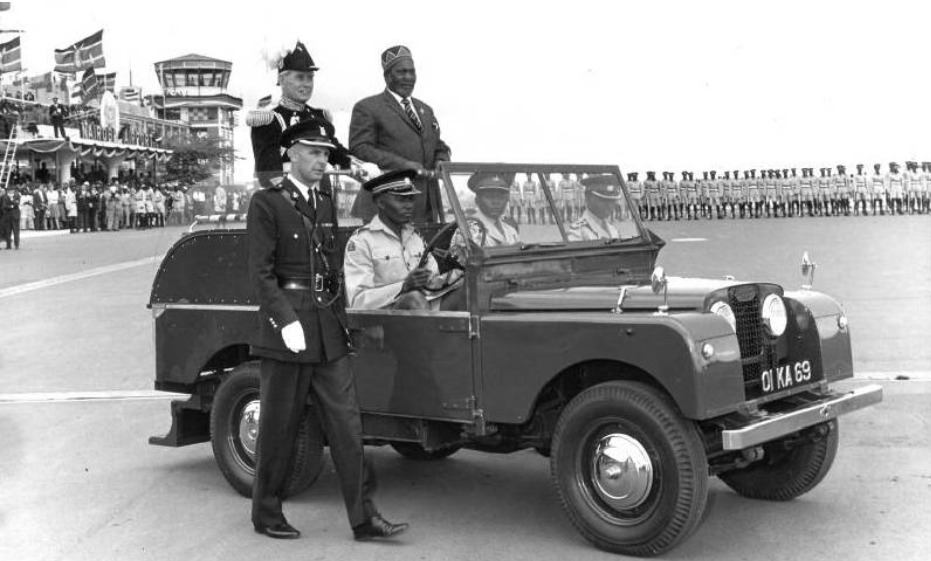
On December 25 1963, the Cabinet declared a State of Emergency in north eastern Kenya. Colonial Governor General Malcolm Mac Donald applied the Preservation of Public Security Ordinance to detain people without trial.
A five mile ‘Prohibited’ zone was established along the 400-mile Kenyan border with Somalia. The emergency powers were extended to; Marsabit, and Isiolo. By 1966, the prohibition powers had engulfed, Lamu and Tana River districts.
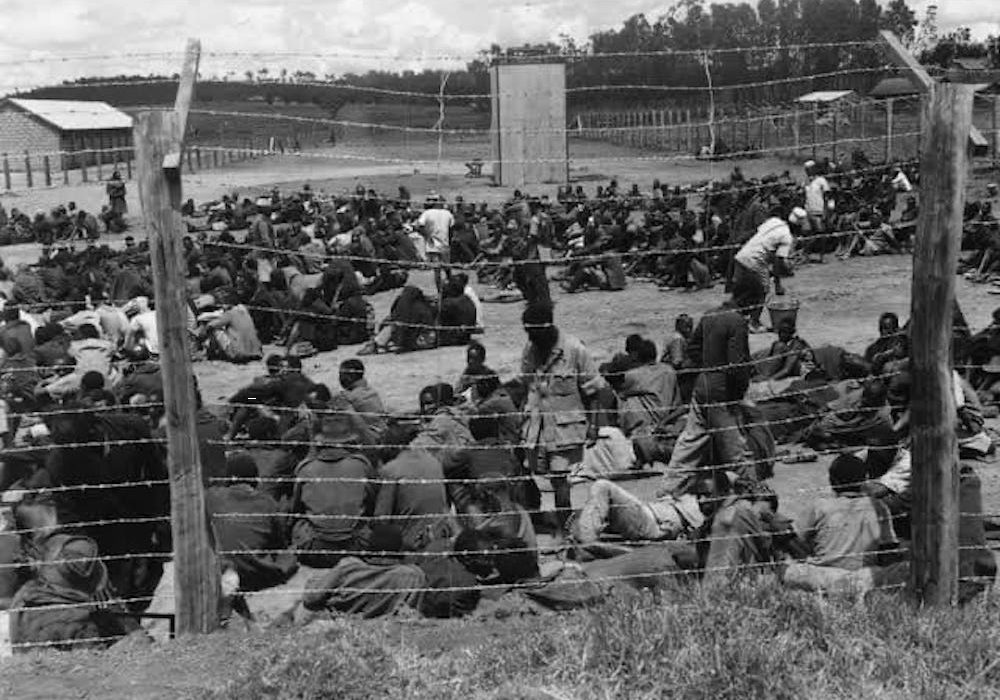
The Shifta applied guerilla tactics. They employed hit and run techniques and mined roads. The Kenya government adopted brutal insurgency methods. Villages were surrounded, sealed with barbed wires and guarded by troops.
Families were collectively punished. People were beaten, tortured and killed and livestock confiscated. The shifta conflict left many wounds and scars. It developed suspicion and hostility between Somali’s and other Kenyan communities. These wounds have been festering for decades.
Hornsby says that: “Development in the colonial era in North Eastern had been non-existent, and this changed little after independence. The State treated Kenyan Somali as subjects rather than citizens, and the region as military ruled colony. Travel to and from North Eastern was restricted. Kenyan Somali’s required special passes to operate in their own region.”
Writes Hornsby: “Conditions were hard for those suspected of supporting the Shifta with most ethnic Somali, Muslim Boran and Sakkuye kept in emergency camps, and subject to mass herd confiscation. In 1962, Isiolo District had 55,000 occupants, but by 1969, the population had fallen to 30,000, the rest having fled or been killed.”
THE NFD
The Northern Frontier District comprised what later became part of Eastern Province; Tana River, Turkana and West Pokot Districts.
The Greater Somalia issue dominated the Kenyan Lancaster House conferences in 1960, 1962 and 1963. Since, neither of the contestants at Lancaster House; KANU and KADU, nor the departing colonial authorities, were for secession of NFD, a middle‐way solution was agreed. Somalis on the Kenyan side formed a political party called; the Northern Province Peoples Progressive Party (NPPP), and declared; “Secession Now!”
At the second Lancaster Talks in 1962, the NPPP threatened to head to New York for arbitration by the United Nations. The conference decided that a referendum be held in the NFD. It returned an overwhelming ‘Yes’ to secession.
The last British Governor of Kenya, Malcolm MacDonald, called a tete‐a‐tete with the 34 administrations Chiefs in the 6 districts of NFD in Wajir. He wanted to persuade them to participate in the May 1963 independence elections. The Chiefs quit government service and walked out on him.

An urgent meeting was called in Rome in August 1963. The Somali government insisted that since Kenya was yet to attain full independence, the meeting be between Somalia and Britain. Kenyatta dispatched cabinet ministers Mbiyu Koinange, Tom Mboya and James Gichuru as part of the British delegation to Rome.
In Rome, the British head of delegation, Duncan Sandays, chose Tom Mboya to present the British view. Mboya told the meeting that the so, called Greater Somalia would forever remain a “bad dream in the minds of those who conceived it”. Kenya would not cede an inch of her territory to Somalia.
SHIFTA WAR
On Christmas Day of 1963, Shifta bandits killed 40 Kenyans at the Wajir/Tana‐River border. Among the dead were four administration officers, one of them a Briton. They raided and burned villages and ambushed government forces. They mined roads, blowing up three truckloads of Kenya Army personnel in quick succession in the month of October 1966.
The Shifta war went on from 1963 to 1969 badly affecting education in the region. Teachers became scarce. It is this poisoned environment that existed when I worked in North Eastern Province as an Information Officer and Correspondent for the Nation Newspaper in the 1980s.
The plight of northern Kenya has deep historical roots: “When the railway was built through British East Africa towards Uganda to control the source of the Nile and suppress the slave trade, it needed agriculture to make it pay. So, Britain had to encourage British settlers to take up and develop land along the line” says Richard Hughes in his book, Capricon, David Stirlings Second African Campaign.
Since northern Kenya is far from the railway line, it offered little to the colonial government. The British government only set up a few essentials such as police stations, military bases and administration offices. With scarce resources, only a few schools were built and they were below standard. Colonial investments focused mainly on Kenya’s central and Nairobi areas.
INSECURITY FIRE
Like an old festering wound, insecurity still haunts education in the northern region. First it was the 28 years of State of Emergency imposed on the region by the colonialists and Jomo Kenyatta. President Daniel arap Moi lifted the emergency in 1991.
Mistrust between communities in northern Kenya and other Kenyan communities runs deep. Non-residents are considered outsiders and fear being posted to the region for administrative duties.
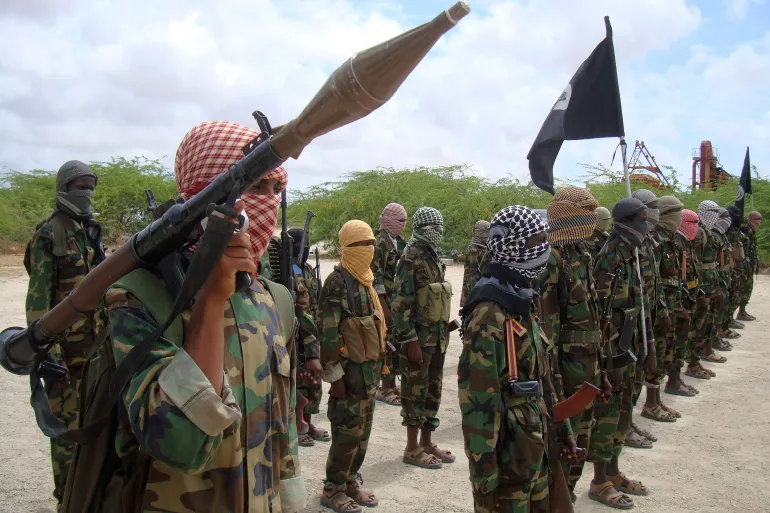
The civil war in Somalia, which broke out in early 1990s, added fuel to the insecurity fire in northern Kenya. Today, Islamic fundamentalist groups such as; al-Shabaab, Daesh and Takfiriyun, have emerged to oppose western education.
A researcher and scholar, Saida Hussein Mohamed, says in an article titled; “Al-Shabaab and the Education Crisis in Northern Kenya:” that; northern Kenya has borne the brunt of al-Shabaab attacks. The group’s leaders have sought to establish a base in the region- one of the country’s poorest, where ethnic Somali population has for years complained of mistreatment by the state. The insecurity hit the education sector hard since 2018 when al-Shabaab began attacking and killing teachers many of whom started fleeing the region that year.”
In the article published in The Elephant, Saida says that: “Most teachers hail from elsewhere in Kenya. Al-Shabaab, which seeks to create sectarian strife, has killed many public servants besides teachers, including engineers and security personnel. The armed group staged an attack that targeted the only university in the entire region, Garissa University College killing 148 students.”
I have not talked about the tears shed by the; Gabra, Garre, Rendille, Borana, Turkana, Pokomo, Malakote, Mijikenda, Maasai, and millions of other Kenyans who have lived on the peripheries of the nation called Kenya.
Though they occupy over 80 percent of the Kenyan landmass, subsequent governments have treated them like the scum of the earth. As President William Ruto tours the ASAL in search of votes, he owes them a public apology for the atrocities they have survived and continue to endure.