





Smart irrigation brings new hope to Kenyan farmers amid climate change
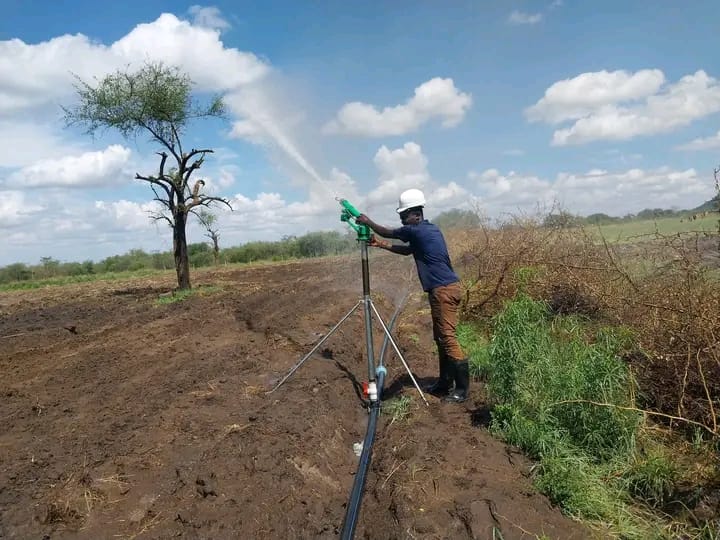
With unpredictable rainfall and recurring droughts increasingly disrupting food production, a growing number of Kenyan farmers are turning to modern irrigation technologies to protect their livelihoods and improve farm productivity.
Agriculture accounts for more than 20 per cent of Kenya’s Gross Domestic Product (GDP) and remains the country’s leading source of employment. However, the sector’s heavy reliance on rain-fed farming has left millions of producers exposed to the effects of changing climatic conditions, driving demand for climate-smart agricultural solutions.
Among the companies contributing to this shift is Faulu Irrigation LTD, a Nairobi-based enterprise. The firm provides the supply and installation of irrigation systems, greenhouses, agricultural nets, solar dryers and water storage solutions to farmers across Kenya.
Its range of products includes drip and sprinkler irrigation systems, rain hose kits, solar-powered irrigation equipment, filtration systems and water pumps, all aimed at improving water use efficiency while enhancing crop production.
Faulu Irrigation LTD Manager Ann Mutua notes that the company was established to provide farmers with practical, affordable and dependable irrigation technologies that help them cope with the increasing effects of climate change.
“Climate change has made rainfall patterns more unpredictable, but farmers’ success should not depend on the weather. Our goal is to provide practical irrigation solutions that enable farmers to produce crops throughout the year while using water efficiently,” said Mutua.
She notes that the company offers comprehensive services, including farm assessments, irrigation system design, installation, farmer training and after-sales maintenance.
“We do more than supply irrigation equipment. We work closely with farmers to identify the most suitable systems for their crops, helping them maximise productivity and achieve sustainable returns on their investment,” she adds.
Besides irrigation systems, the company also supplies wooden and steel greenhouses, shade nets, bird nets, solar dryers and high-density polyethylene (HDPE) dam liners to improve agricultural production, minimise post-harvest losses and enhance water harvesting and storage.
For Geoffrey Wanyama, a farmer from Webuye in Bungoma County, adopting drip irrigation has significantly transformed his farming business.
“Before installing the system, I relied entirely on rainfall and frequently experienced heavy losses during dry periods. Now I harvest throughout the year, my yields have improved considerably and my earnings have increased,” said Mr Wanyama.
In Machakos County, farmer James Musembi said irrigation has enabled him to continue farming successfully despite the area’s persistent dry conditions.
“Water is no longer my greatest challenge. The irrigation system allows me to grow crops even during extended droughts, ensuring I have produce for the market and a reliable source of income for my family,” said Mr Musembi.
Agricultural experts continue to urge farmers to embrace irrigation and other climate-smart farming technologies as Kenya works to strengthen food security amid increasingly unpredictable weather conditions.
Through its nationwide installation services and customer support network, Faulu Irrigation LTD says it is committed to making modern irrigation technology accessible to both small-scale and commercial farmers, enabling them to increase productivity and build resilience against the impacts of climate change.