





BRIAN SEGO: The Malava By-Election Farce: How MCA David Ndakwa llays the crowd while dodging the law

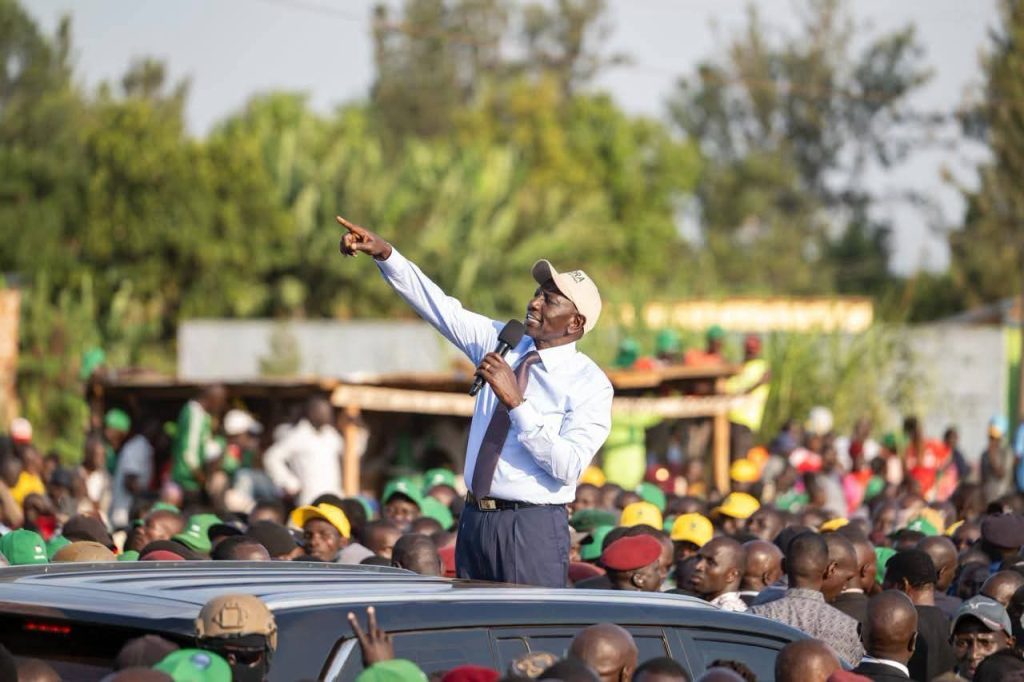
You can almost hear the drumroll: “Vote for change… trust me.” But behind the polished speeches, the selfies with jubilant voters, and the bright UDA posters of MCA David Ndakwa lies a simple, unyielding truth: he has not resigned his seat, a sine qua non under Kenyan law for any public officer wishing to run in a by-election.
Yet he persists, shaking hands, smiling, promising, acting the part as if the law bends to his ambition. This isn’t just audacity — it is a betrayal of voters’ trust, a mockery of legal duty, and an insult to the electorate he pretends to serve.
Here’s why Ndakwa’s campaign is built on quicksand, and why every handshake, every promise, and every vague statement about eligibility is a calculated insult to Malava voters.
1. The Law Is Clear — But He Ignores It
Kenya’s Constitution and the Elections Act are unforgiving when it comes to by-elections. Section 43(5A) of the Elections Act, No. 24 of 2011, states:
“A public officer who intends to contest in a by-election under this Act shall resign from public office within seven days of the declaration of a vacancy.”
No wiggle room. No “I’ll see later” clause. The clock starts ticking the moment the Speaker declares the seat vacant.
David Ndakwa is a sitting MCA, which under Article 260 of the Constitution qualifies him as a public officer. Exemptions like s.43(6) — which allow MCAs to run in general elections without resigning — do not apply to by-elections.
Courts have enforced this strict rule, most notably in Mwawaza v. Mwaidza, Petition E001 of 2022, High Court at Voi, 15 July 2022, reported as [2022] KEHC 10031 (KLR), where Justice J.N. Onyiego upheld the IEBC’s rejection of a public officer’s nomination for failing to resign within the statutory timeline.
So when Ndakwa campaigns as though the law is optional, he’s knowingly flaunting legal reality.
2. The Seven-Day Deadline Has Long Passed
The seat in question was officially declared vacant; the statutory seven-day window under s.43(5A) has closed. Ndakwa remains in office, with no documented resignation. Any claims of eligibility are therefore baseless.
Yet he continues to shake hands, attend rallies, and project legitimacy. This is not innocent oversight. It is deliberate manipulation — using voter hopes to gain visibility and momentum while ignoring the legal requirement for resignation.
3. Court Precedents Crush the Illusion of Eligibility
Supporters of Ndakwa often misrepresent precedent:
- Kibeh v Waibara (Court of Appeal, 2022) — yes, MCAs may be nominated in general elections without resigning. But that reasoning explicitly applies only when all seats end together, not in mid-term by-elections.
- Public Service Commission v Cheruiyot (Court of Appeal, 2022) — confirmed that resignation rules exist to protect fairness and integrity. These are mandatory obligations, not guidelines.
- Mwawaza v. Mwaidza (High Court, 2022) — the decisive precedent for by-elections: failure to resign within the statutory period leads to automatic disqualification.
The Supreme Court in NHIF Management Board v. Kenya Union of Commercial Food and Allied Workers & Another (2025) further clarified that board members and similar officeholders are public officers under Article 260, reinforcing that public officer status carries serious electoral consequences. By parity of reasoning, MCAs like Ndakwa cannot escape this requirement.
4. Voters Are Being Taken for Granted
Ndakwa’s campaign is a textbook example of entitlement masquerading as engagement:
- He attends rallies, shakes hands, and promises representation, pretending eligibility.
- He allows photos and videos to circulate as though he is already a nominee-in-waiting.
- When pressed about resignation, he offers vague statements, half-promises, or silence, while keeping the electorate in suspense.
This is not leadership — it is manipulation, treating voters as pawns while using party branding and name recognition to appear legitimate.
5. Legal Consequences Are Immediate and Certain
If Ndakwa submits nomination papers without resigning:
- IEBC, bound by s.43(5A), must reject them.
- Courts will almost certainly uphold such rejection, as in Mwawaza v. Mwaidza.
- Even internal party “acceptance” cannot override statutory disqualification.
In short, continuing to campaign without legal compliance is legally indefensible.
6. Democracy Requires Respect for Law
Kenya’s democracy is not a stage for theatrics. It depends on:
- Trust that candidates play by the same rules.
- Integrity from public officers who wish to contest new mandates.
- Avoidance of misuse of state resources and unfair advantage.
When Ndakwa acts as though resignation is a technicality, he demeans the law, mocks voters, and undermines institutional trust.
7. Where Ndakwa Stands — And Where He Should Have Stood
All signs indicate that Ndakwa did not resign within the statutory seven-day period. Without proof of resignation:
- He is legally ineligible for UDA nominations in the Malava by-election.
- The only lawful path would have been to resign promptly, obtain documented acknowledgment, and lodge nomination papers with a clean record.
Instead, he continues as MCA, campaigning as if the law bends for him — a betrayal of voters’ trust.
8. References: Legal Foundation
- Elections Act, No. 24 of 2011, Sections 43(5), 43(5A), 43(6) — resignation for by-elections; exemption for general elections.
- Constitution of Kenya 2010, Articles 99 & 260 — definition and disqualification of public officers.
- Kibeh v Waibara & Another (Court of Appeal, 4 March 2022) — nomination vs. election in general elections.
- Public Service Commission & 4 Others v Cheruiyot & Others (Court of Appeal, 8 February 2022) — constitutionality of Section 43 upheld.
- Mwawaza v. Mwaidza, Petition E001 of 2022 (High Court at Voi, 15 July 2022) — rejection of nomination for failure to resign.
- NHIF Management Board v. Kenya Union of Commercial Food and Allied Workers & Another (Supreme Court, 2025) — board members/public officers confirmed under Article 260.
Out of the Race, Out of Excuses
David Ndakwa has had the chance to show seriousness, respect for law, and integrity. Instead, he has danced around the truth, misled voters, and treated the statutory resignation requirement as optional.
Kenya’s law is clear, the deadlines are binding, and the courts are firm. Ndakwa is out — and any attempt to proceed otherwise is not just politically reckless, it is legally impossible.
Voters deserve honesty, integrity, and adherence to law. Ndakwa’s campaign, built on illusion and defiance of the law, is a betrayal of both democracy and the electorate.


